How it fits together
One god or many? Both answers are old, and most people hold them at once: many distinct gods, or one divine reality wearing many faces. At the top sit three roles. Brahma makes the world, Vishnu keeps it running, Shiva ends it so the next one can begin. When order breaks down, Vishnu is born into the world to mend it; Rama and Krishna are two of those births — which is why a blue figure is always Vishnu or one of his lives. The goddess works the same way in reverse: one power with many faces, gentle as Parvati, armed as Durga, unleashed as Kali. The rest is family. Lakshmi is Vishnu's wife, Saraswati is Brahma's, Parvati is Shiva's; Ganesha is Shiva and Parvati's son, and Hanuman is Rama's devotee rather than kin. And a temple is one god's house, not a hall of the pantheon: you visit the resident.
The ten you will keep meeting
Ganesha, remover of obstacles
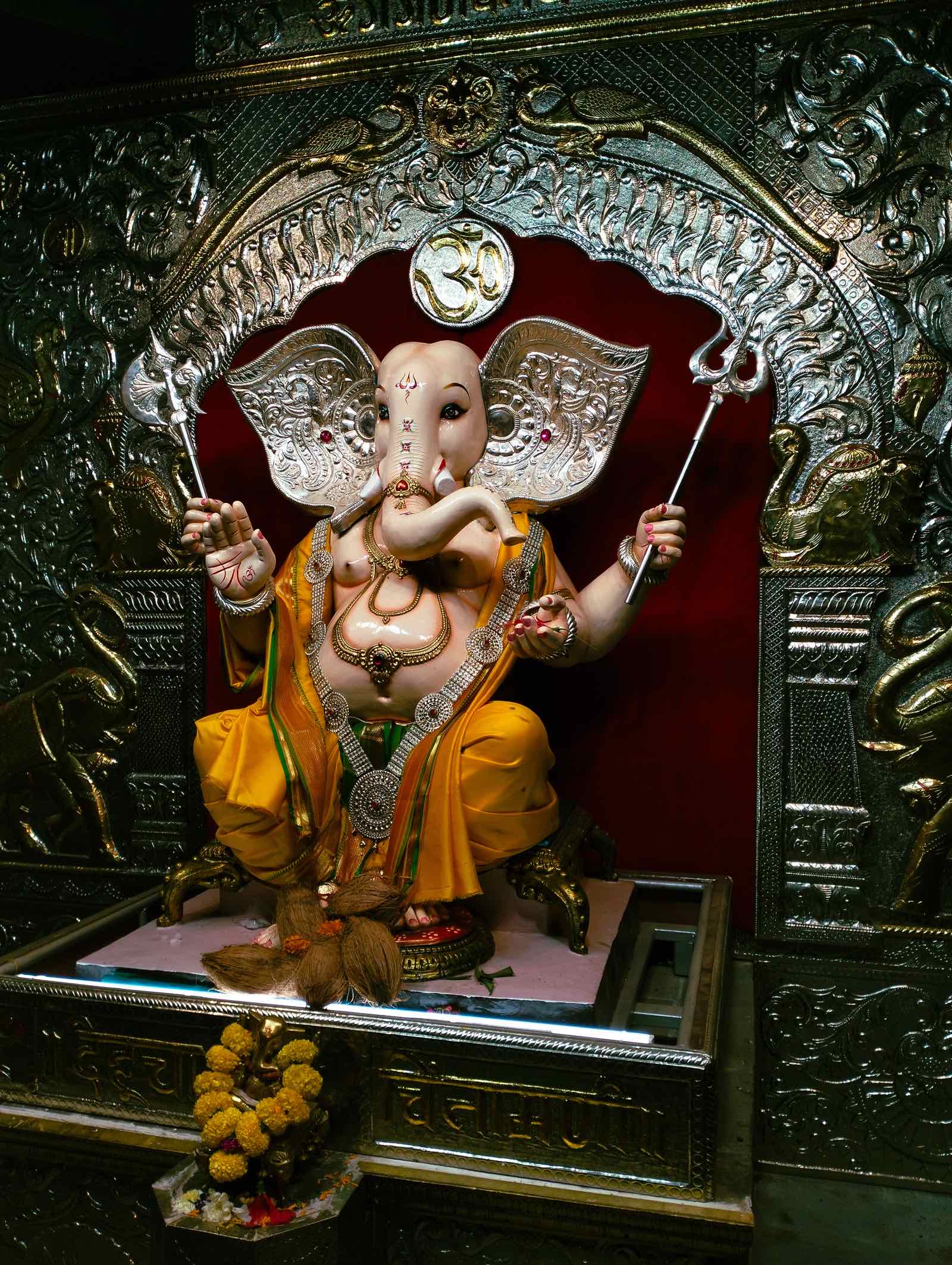 Spot him by. Elephant head, one tusk snapped off, a round belly, a rat sitting at his feet. photos Who he is. Shiva and Parvati's son. In the best-known telling Shiva beheaded the boy without knowing who he was, and made it good with the head of the first creature to hand — an elephant's. He clears the way, so he is worshipped first, before any other god, at the start of anything: a journey, a wedding, a new ledger. You'll meet him over doorways and shop tills; the Ganesh Pol at Amber (day 10) is named for the painted Ganesha above its arch.
Hanuman, strength in service
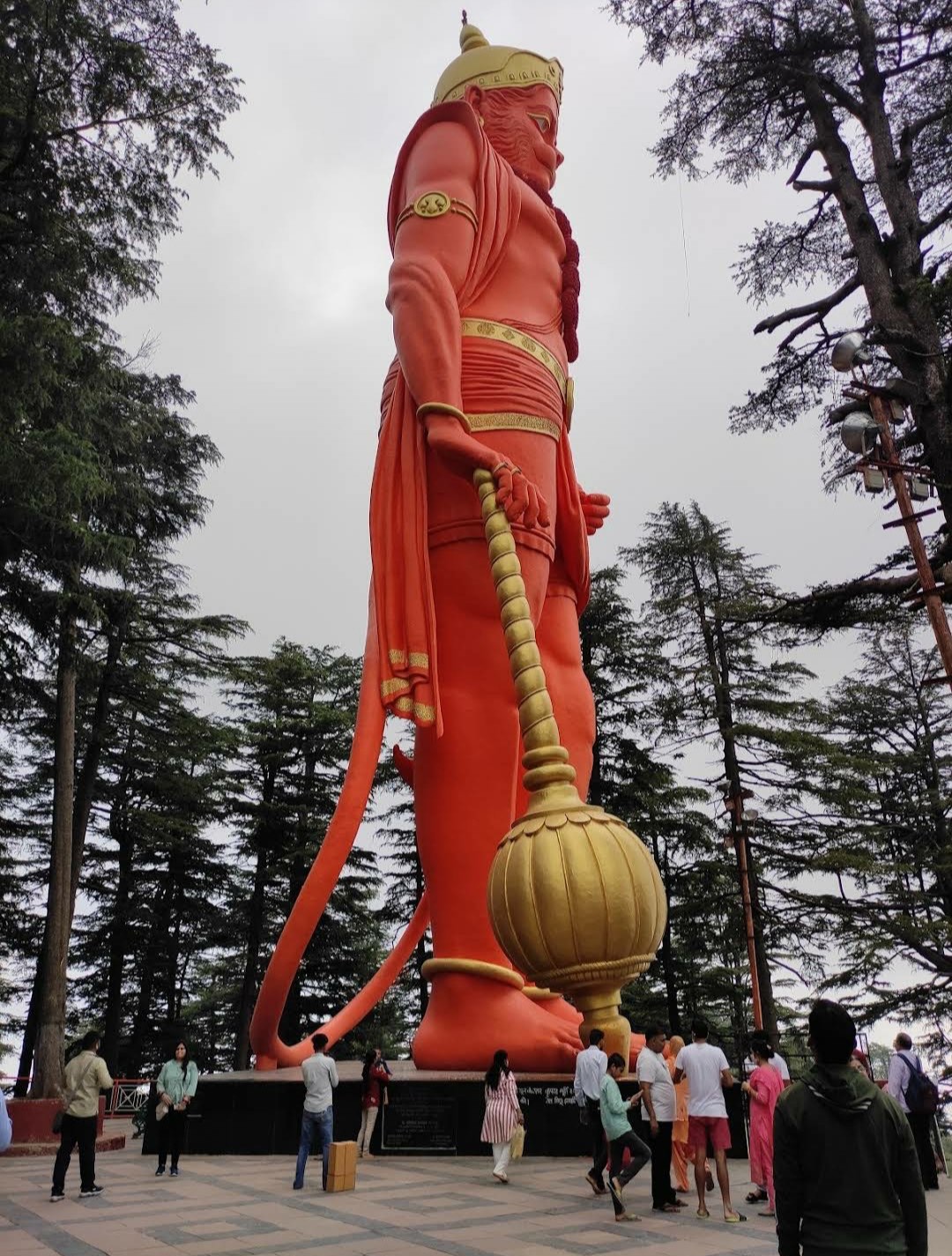 Spot him by. Monkey face, a mace, sometimes a whole mountain carried in one hand. The image itself is usually orange, thick with vermilion paste. photos Who he is. The monkey general of the Ramayana: he leapt the sea to find Rama's stolen wife, and when a wounded man needed one herb from a Himalayan hillside, he brought the hillside. Devotion with muscles on it; people ask him for what he has — courage, protection on the road, freedom from bad spirits. You'll meet him at most roadside shrines, which are his. Tuesday and Saturday are his days — that is why a village temple is busy on a Tuesday evening.
Shiva, who ends the world
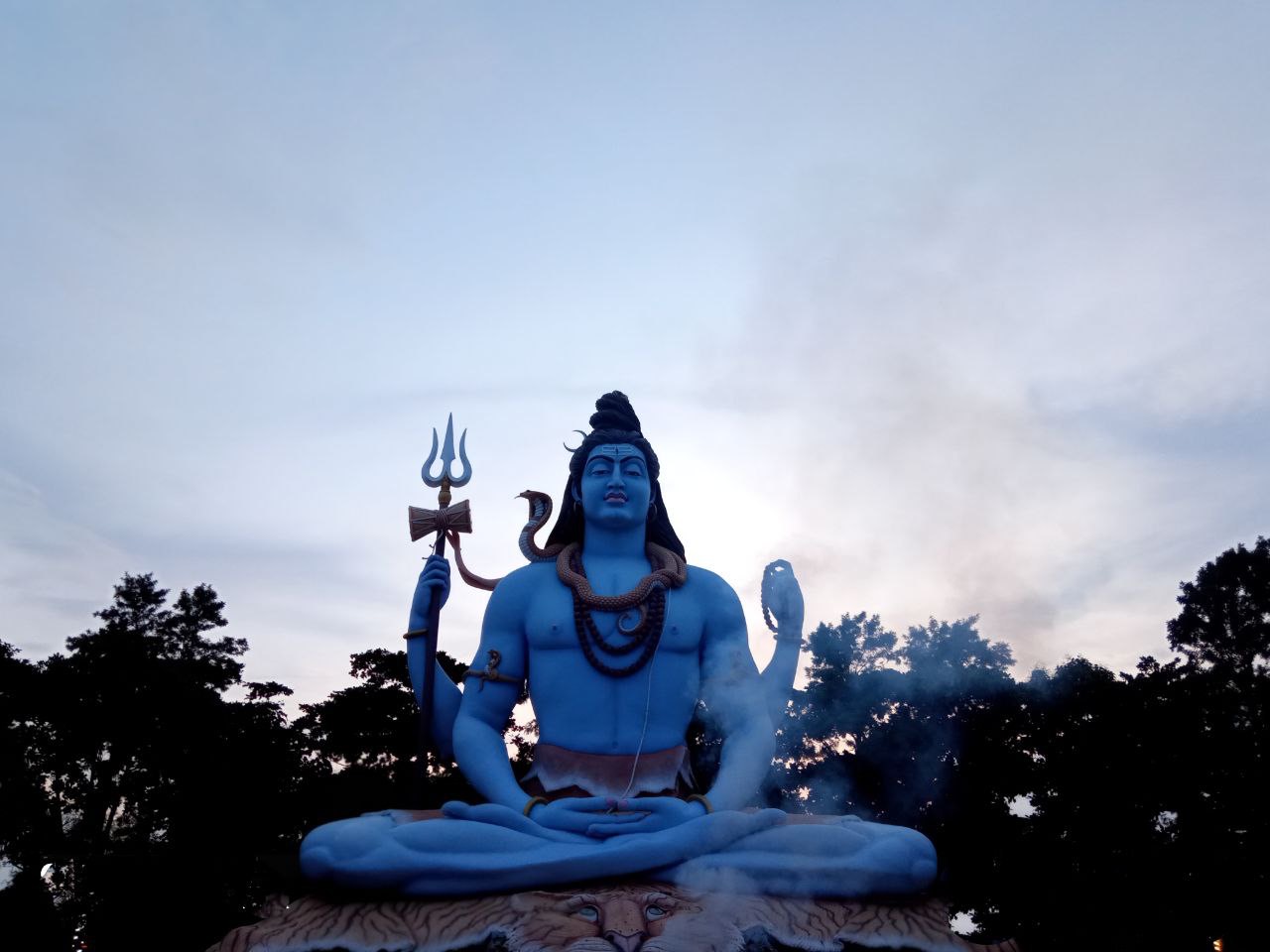 Spot him by. Trident, crescent moon in the piled-up hair, a third eye, a cobra round the neck. The bull Nandi sits outside, facing in. photos Who he is. The third of the great trinity, who ends each age of the world so the next can begin — and, between times, the great ascetic, meditating on a Himalayan peak with the Ganges falling through his hair. Husband of Parvati, father of Ganesha. His worshippers call him Mahadev, the great god.
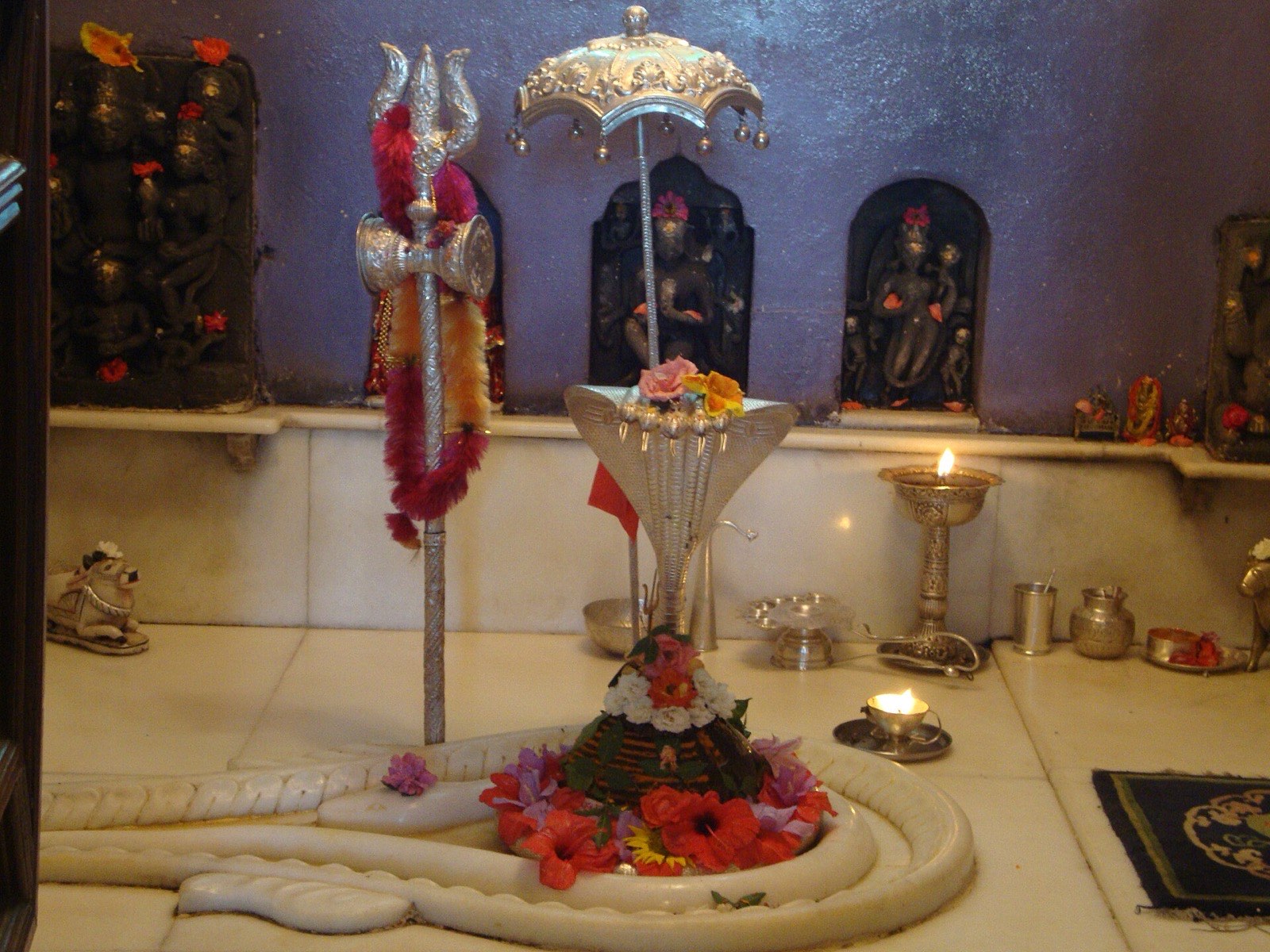 Most Shiva shrines hold no figure at all: an upright stone in a spouted base, wet with the morning's milk and water — presence rather than portrait. the lingam You'll meet him in village temples all along the Aravalli stretch (day 6).
Vishnu, who keeps it running
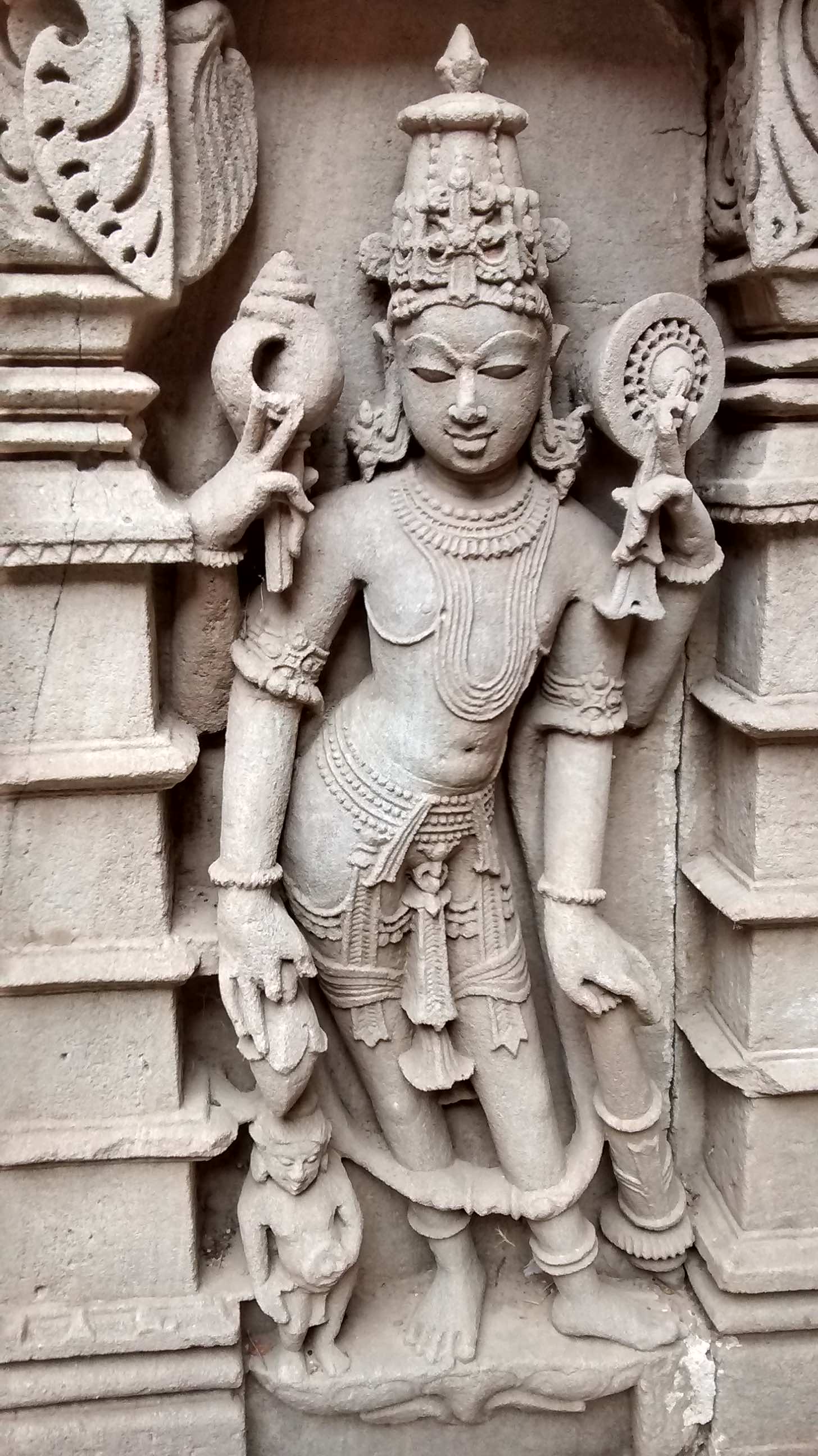 Spot him by. Four arms holding a conch shell, a disc, a mace and a lotus. The eagle-man Garuda kneels opposite the door, facing him. photos Who he is. The preserver: he keeps the world in order between Brahma's making of it and Shiva's unmaking, and when order fails badly enough he is born into the world to mend it. Nine such births so far, by the usual count — Rama and Krishna are the two that matter on this trip. You'll meet him at the Jagdish temple in Udaipur (day 5), 150 metres up the street from the City Palace gate: a black stone Vishnu of 1651, up 32 steps, with the brass Garuda in the pavilion outside.
Krishna, Vishnu as cowherd
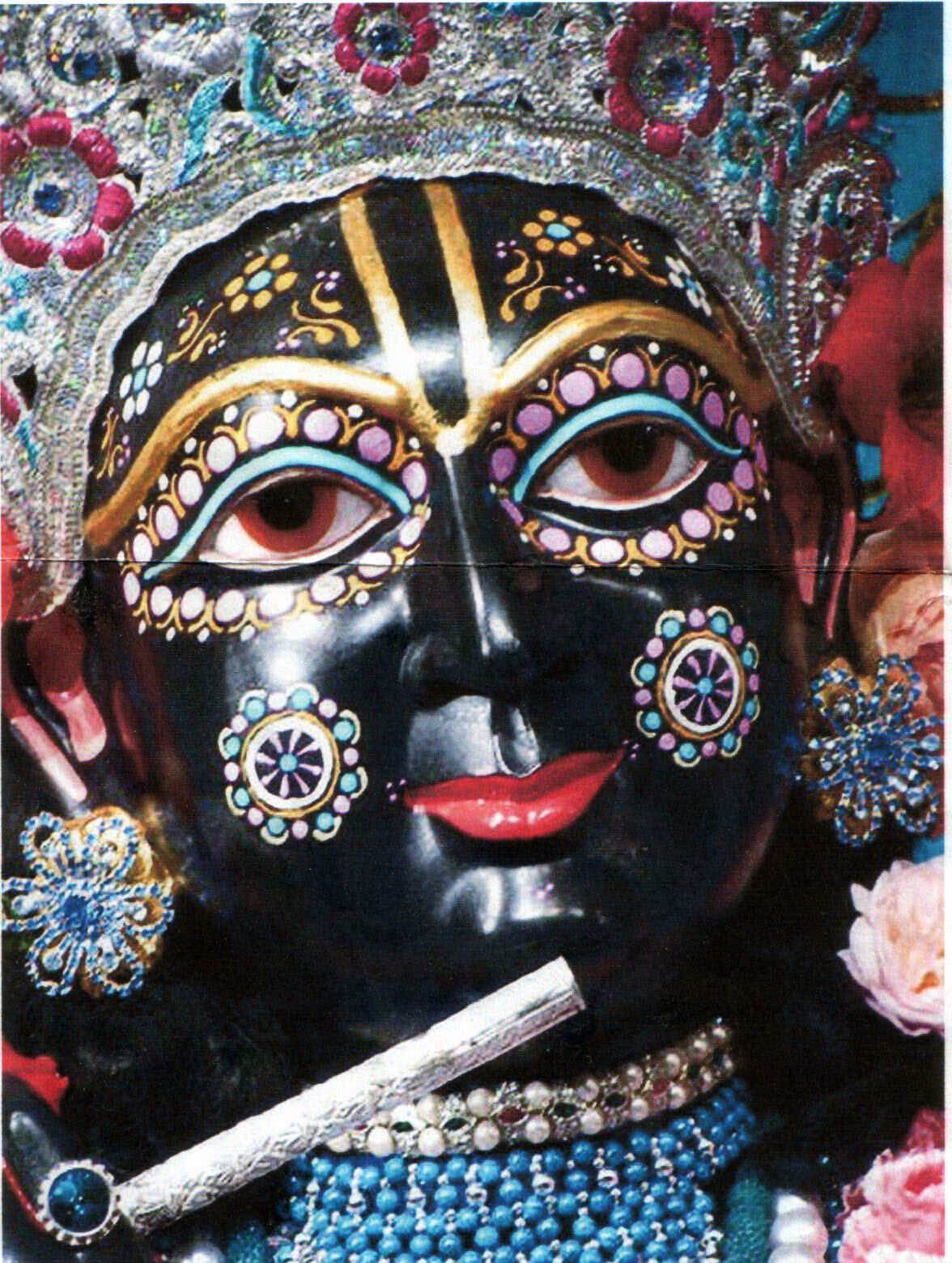 Spot him by. Blue skin, a flute held sideways, a peacock feather in the hair, cows nearby. photos Who he is. Vishnu born among cowherds: the baby who stole butter, the flute-player the milkmaids loved, and — grown up — the charioteer of the Bhagavad Gita, talking a despairing warrior through why he must act. He is the most companionable of the gods, and loving him counts as worship in itself. You'll meet him around Agra, whose countryside is his home ground. Govardhan Puja, the day after Diwali (day 12), marks a hill he lifted there to shelter his village from a storm.
Rama, Vishnu as king
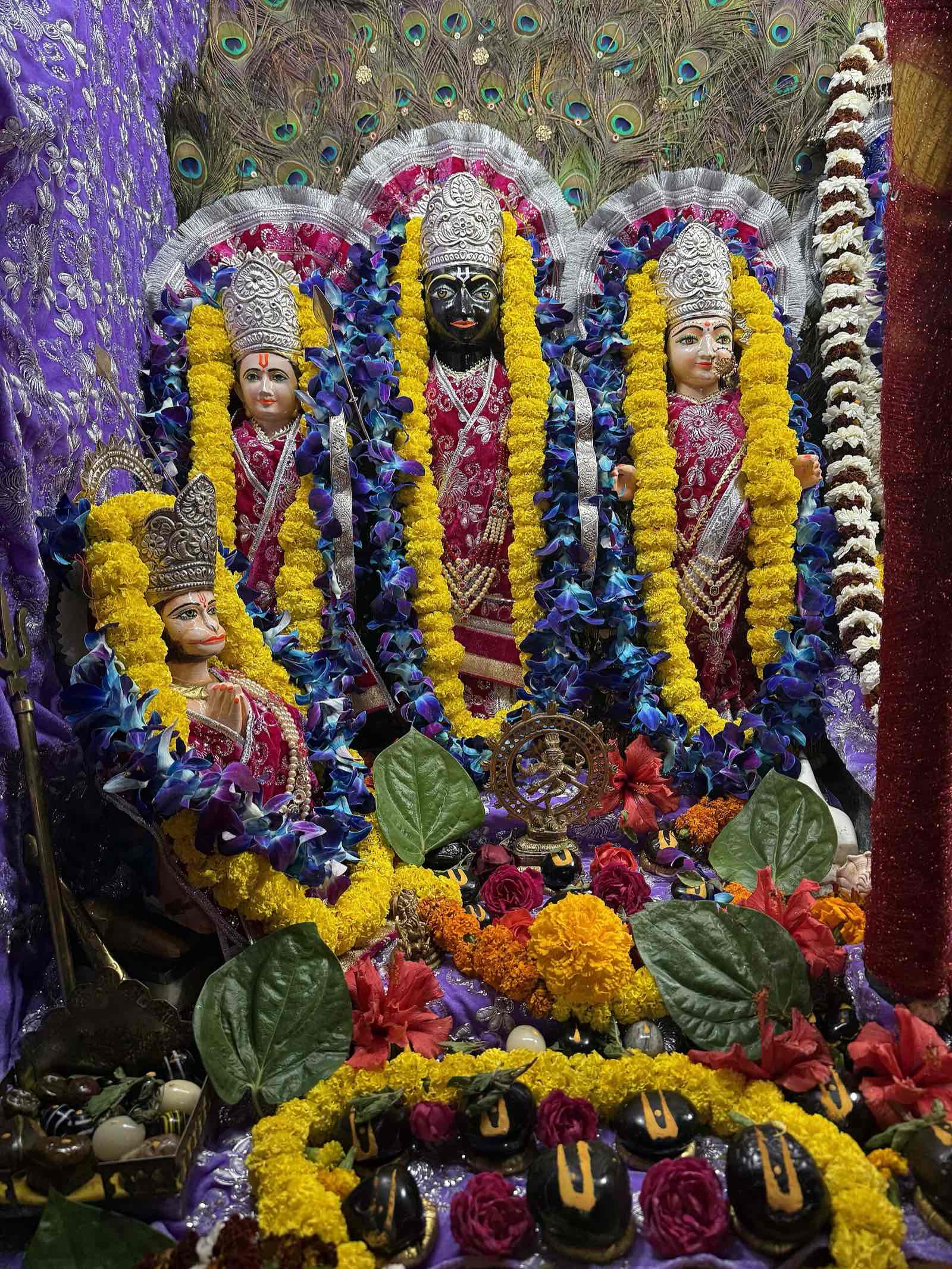 Spot him by. A bow, and three companions: his wife Sita, his brother Lakshmana, and Hanuman kneeling at his feet. photos Who he is. Vishnu born as a prince, and the hero of the Ramayana: fourteen years of exile, his wife stolen by the demon king of Lanka and won back with Hanuman's army. He is the model of how a king — or anyone — should behave; villagers greet each other with his name. You'll meet him on Diwali itself (day 11): the festival is his homecoming from exile, and the lamps were first lit to show him the way.
Lakshmi, wealth and wellbeing
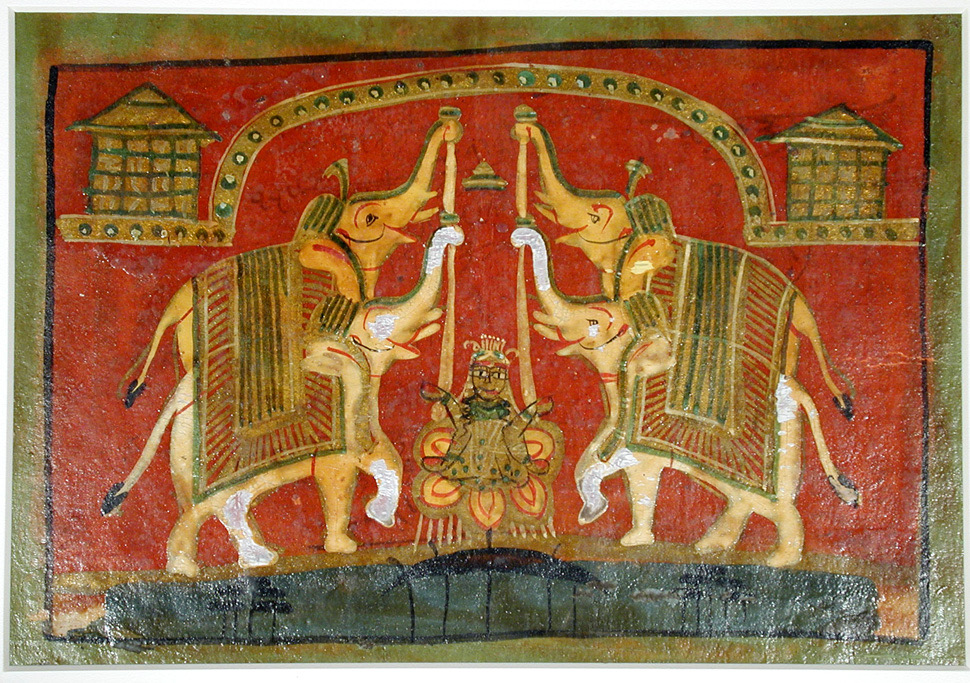 Spot her by. Seated on a lotus, gold coins falling from one open palm, often two elephants pouring water over her. photos Who she is. Vishnu's wife, risen from the ocean when the gods churned it at the beginning of things. She is wealth in the wide sense — money, harvest, health, luck — and she is a guest who visits and leaves: fortune is courted, not owned. You'll meet her wherever trade happens — painted on shop shutters, printed on account-book covers. Diwali night belongs to her: the house is cleaned and lit because she visits the lit house.
Durga and Kali, the goddess armed
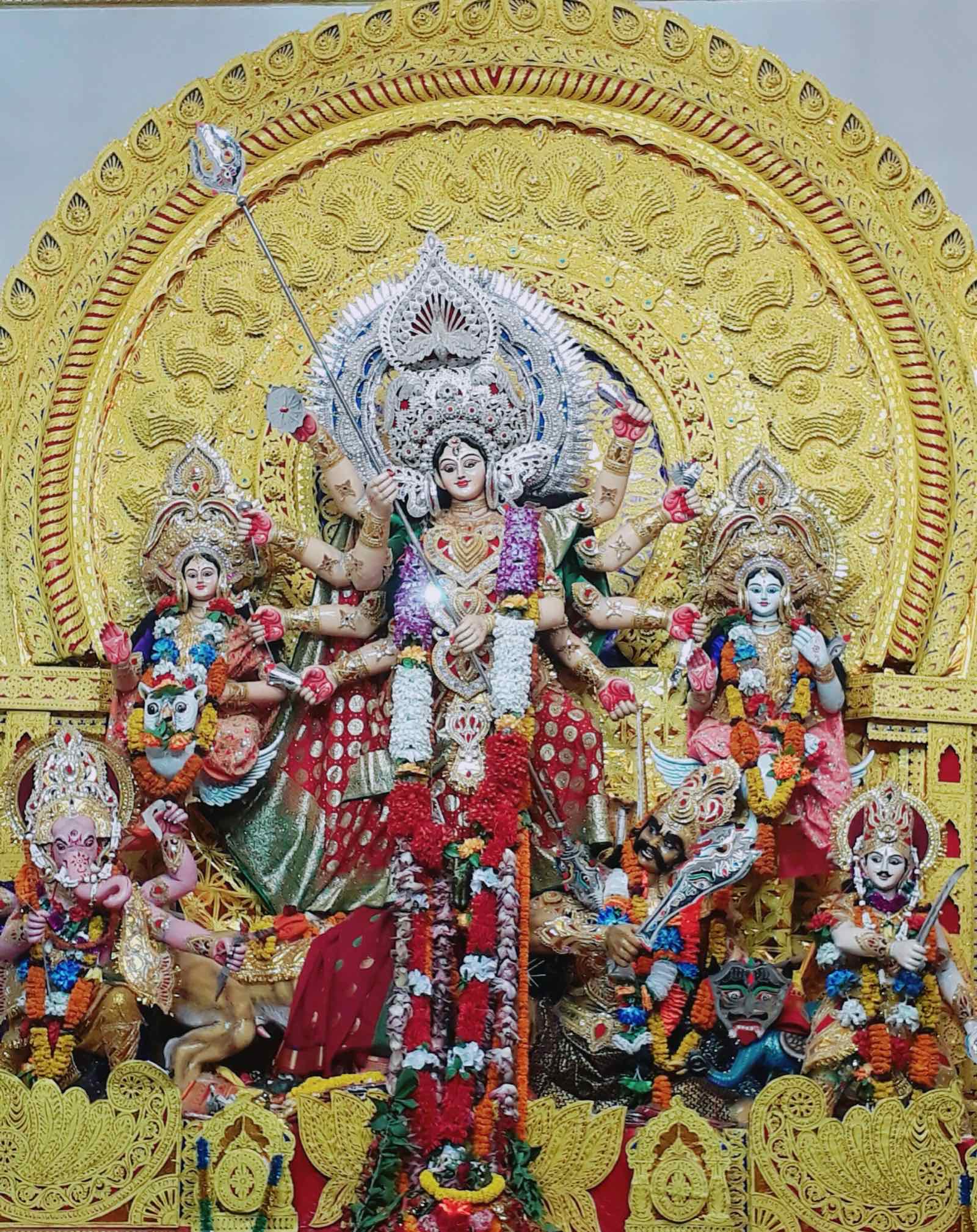 Spot her by. Durga: many arms, a different weapon in each, riding a lion or tiger, usually spearing a buffalo-headed demon. photos Who she is. The goddess as war leader. When a buffalo demon could be killed by no god, the gods pooled their weapons and their anger, and Durga rode out of it — one weapon per hand. Rajput houses keep her as the family goddess — that is why she sits inside forts.
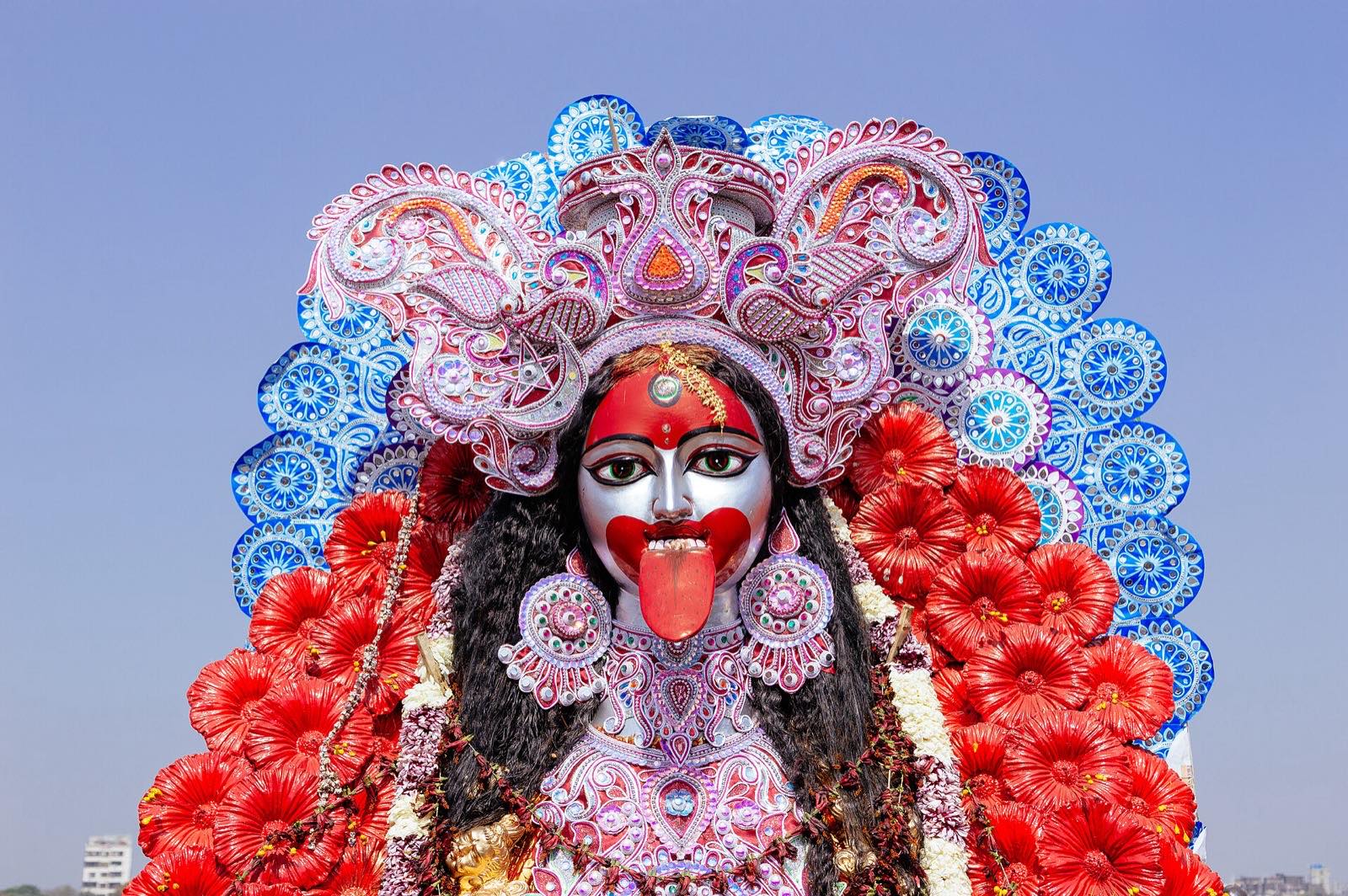 Kali is the same power with the brakes off: black, tongue out, a garland of severed heads, and — in the best-known telling — stopped mid-rampage only when she finds she is standing on Shiva himself. Kali You'll meet them as Chamunda Mata inside Mehrangarh (day 7), installed by Rao Jodha in 1460 and still the Rathore family's goddess, and as Shila Devi at Amber (day 10), brought from Bengal in 1604.
Saraswati, learning and music
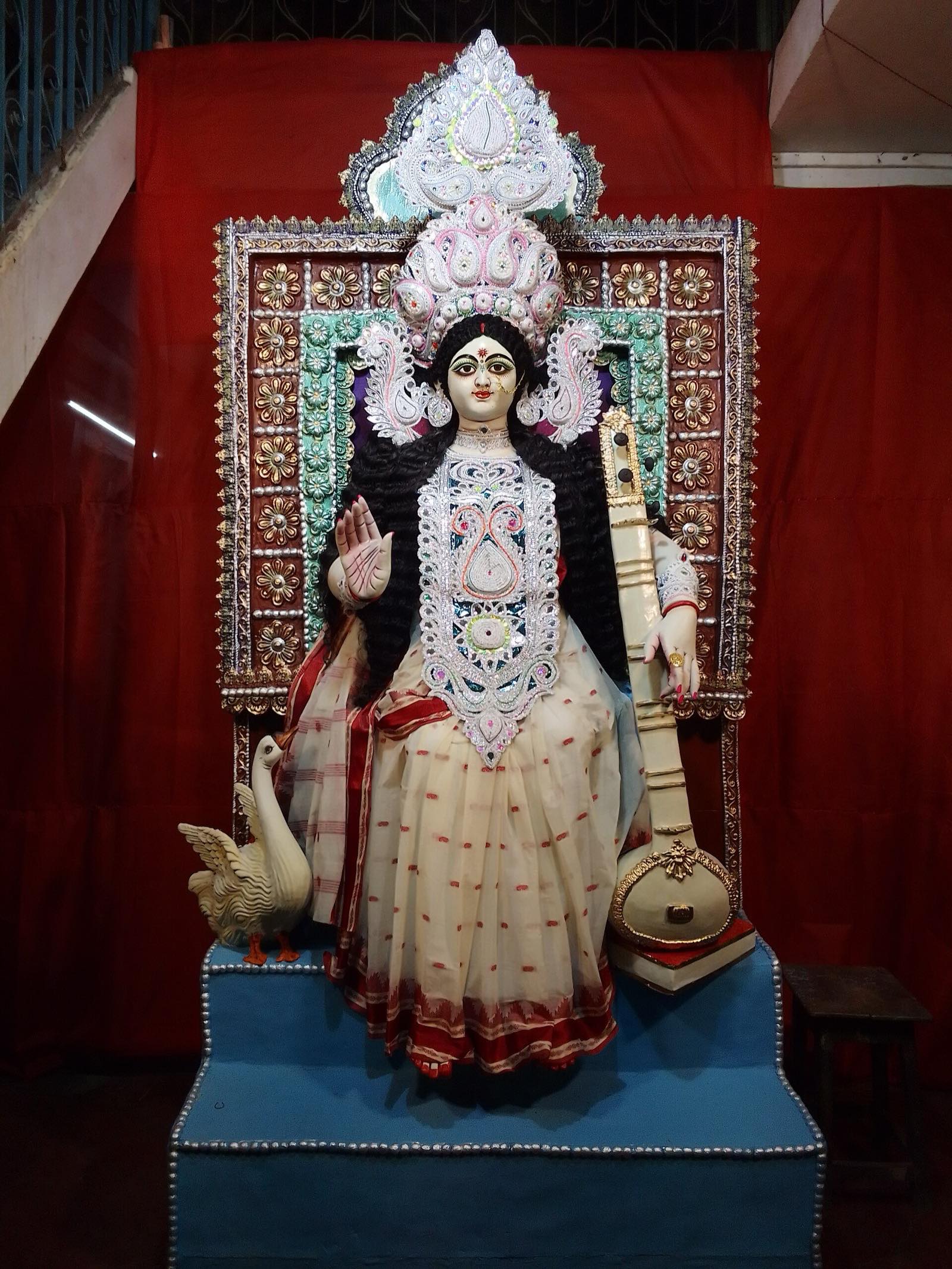 Spot her by. White sari, a long lute (the veena) across the lap, a book, a white goose. photos Who she is. Speech, learning and music; Brahma's consort. Where Lakshmi is gold, Saraswati is white — the point being that knowledge wants nothing. Students seek her before exams, musicians before playing. You'll meet her in schools and instrument shops. For her sake nobody steps over a book; you pick it up and touch it to your forehead instead.
Brahma, the creator retired
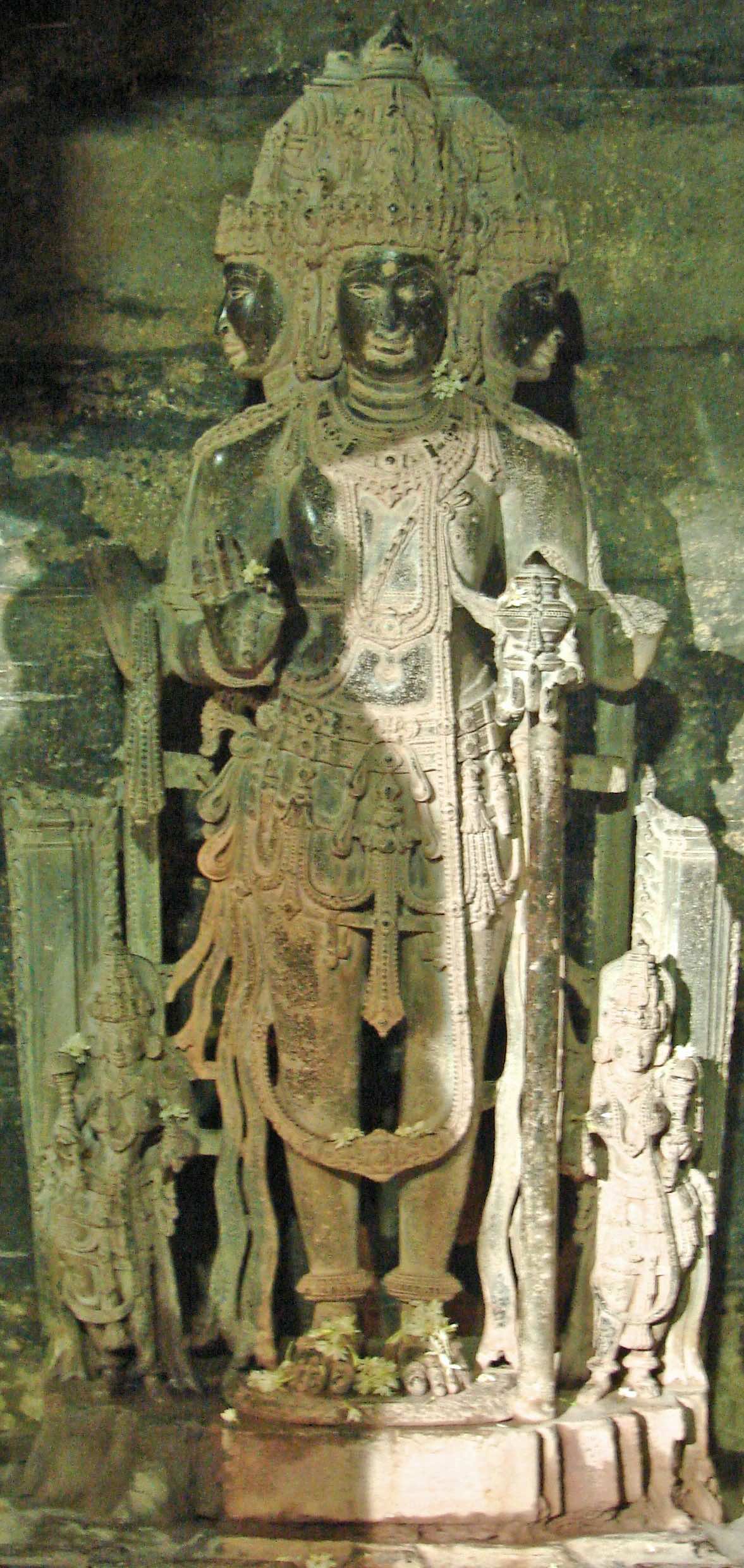 Spot him by. Four heads facing four directions, four arms with a water pot, a ladle, a string of beads and a book; red skin; a goose for a mount. photos Who he is. The maker of the world — but the world only needs making once, and worship long ago moved to the gods who keep it running. You'll meet him at Pushkar (day 8), which holds his one great temple in India. The local story blames a curse from his wife Savitri, who found him performing a rite beside another goddess.
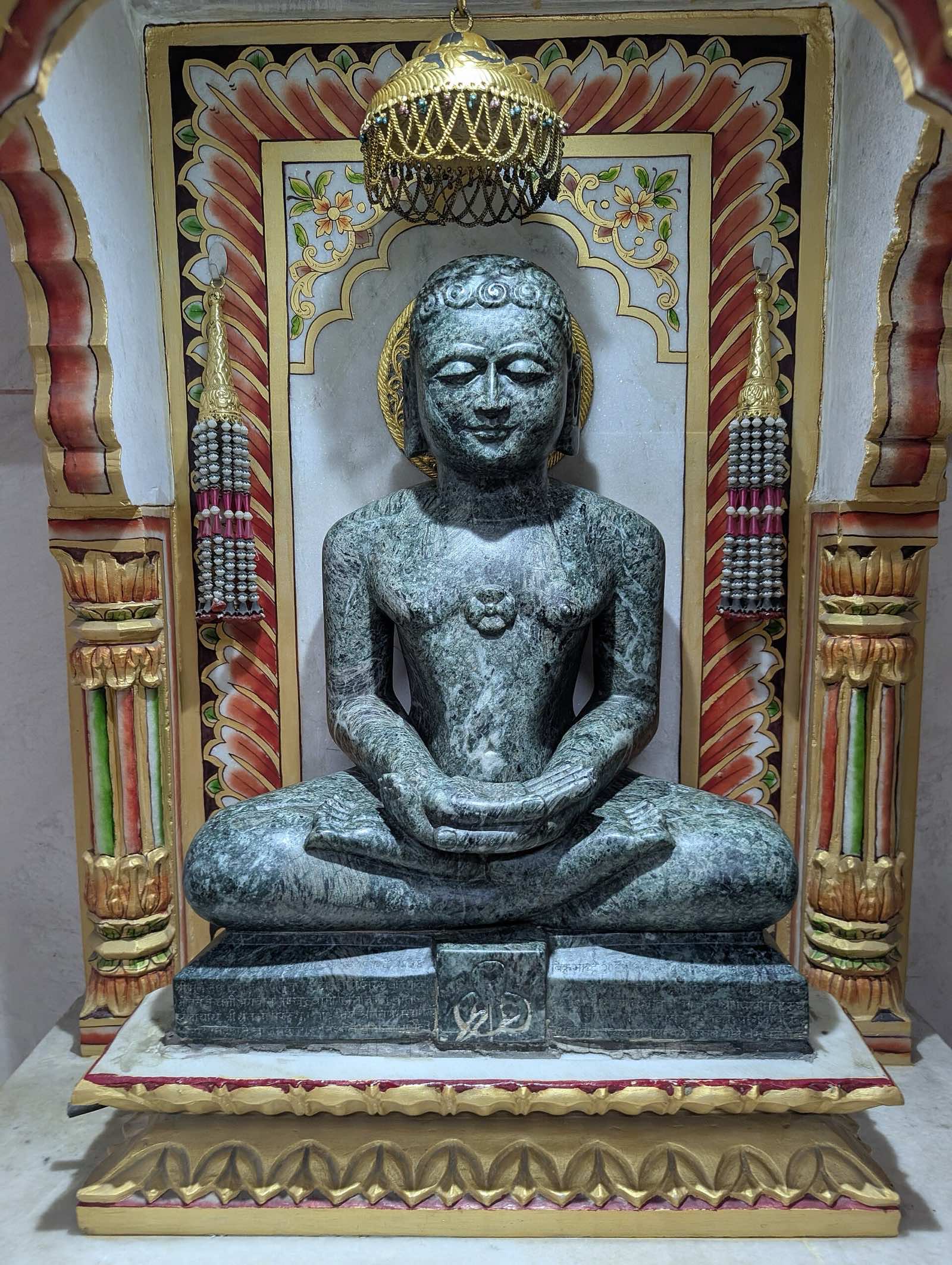 Two shortcuts. If the figure is blue, it is Vishnu or one of his lives. If the figure sits bolt upright and expressionless, with no weapons, no extra arms and no animal at its feet, the temple is Jain rather than Hindu — the Kumbhalgarh walls (day 6) enclose hundreds of them. photos
What people are doing
| Act | What it is |
|---|---|
| Darshan | Seeing the god and being seen back — the point of the whole visit. Not a service you sit through but a look you queue for, often over in seconds. |
| The bell | Rung by hand on the way in, to announce yourself. Anyone may ring it. |
| Aarti | A lamp circled in front of the god while bells and drums go, at fixed hours — usually dawn and dusk. Dusk at Pushkar (day 8) is worth timing the afternoon around. The flame is then carried out to the crowd; people pass their hands over it and touch their forehead. |
| Prasad | Food — sugar lumps, a sweet, a few crumbs — offered to the god and handed back blessed. Take it with the right hand and eat it; refusing is the one real discourtesy. |
| Parikrama | Walking a circuit round the shrine, keeping it on your right. Clockwise, always. Inside a temple, follow whoever is ahead of you. |
| Tilak | The mark a priest presses on your forehead, red or orange or ash-grey. It comes with a blessing, not an obligation — though a donation is expected after. |
| Shoes off | At the threshold of every temple, mosque and gurdwara, often several metres before it. Socks are allowed, and midday stone is hot. A stand takes them; sometimes a man wants ten rupees for minding them. |
Courtesies
- Dress. Shoulders and knees covered, men and women both. Nothing else is asked.
- Photography. Fine in the courtyard as a rule, forbidden in the inner sanctum; look for a sign or catch the priest’s eye first. At Pushkar’s ghats (day 8) the rule is firm — no photographs of people bathing.
- Leather. Jain temples ban belts, wallets and camera straps made of it at the door. Kumbhalgarh’s temples (day 6) are mostly Jain.
- Heads covered. The reverse rule at a gurdwara: everyone covers their head, and scarves are lent at the entrance. Bangla Sahib in Delhi (day 3) hands them out at the shoe counter.
- Money. No ticket, no fixed fee: a box takes notes. A priest who has given you a thread will name a figure, and it is fine to give less.
- Feet. Never pointed at the shrine or at anyone sitting — hence the tucked-up legs.
Gods outside temples
Most of the religion on this trip happens away from any building.
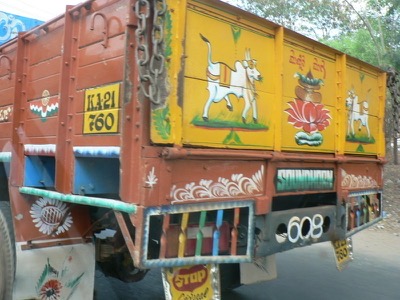 Trucks carry Hanuman on the tailgate (photos).
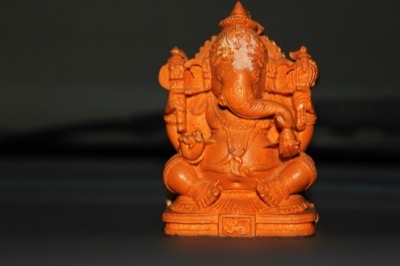 Cars keep a garlanded Ganesha on the dashboard (photos)
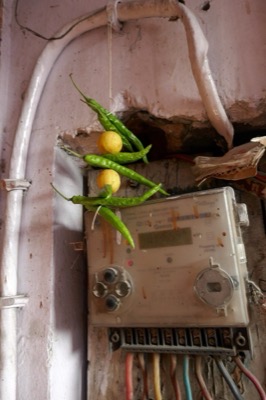 and a lemon with green chillies strung under the bumper, against the evil eye (photos).
- Shops open with incense at the till and the day’s first note touched to Lakshmi’s picture.
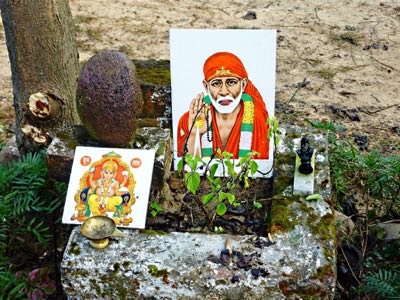 A smear of vermilion on a roadside rock is enough to make a shrine (photos), and once made it is never removed — which is why one sometimes sits in the middle of a widened road, with the tarmac going round it.
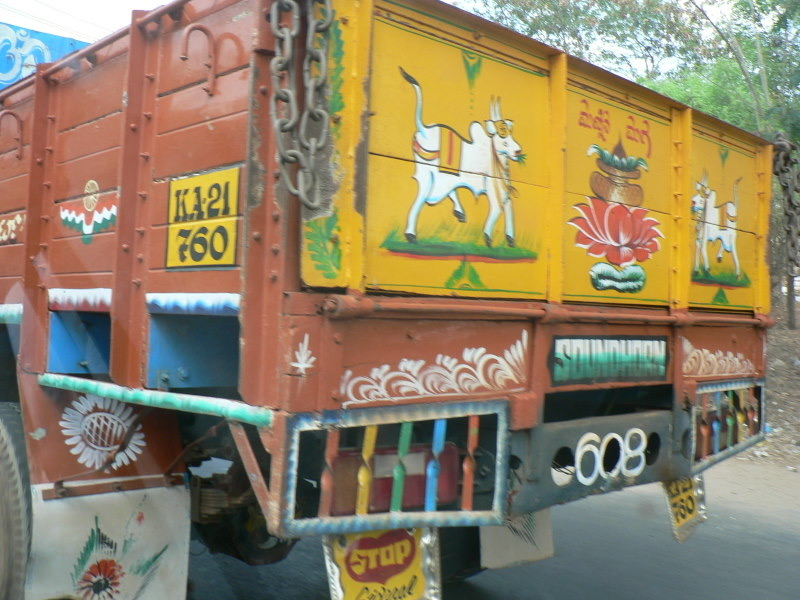
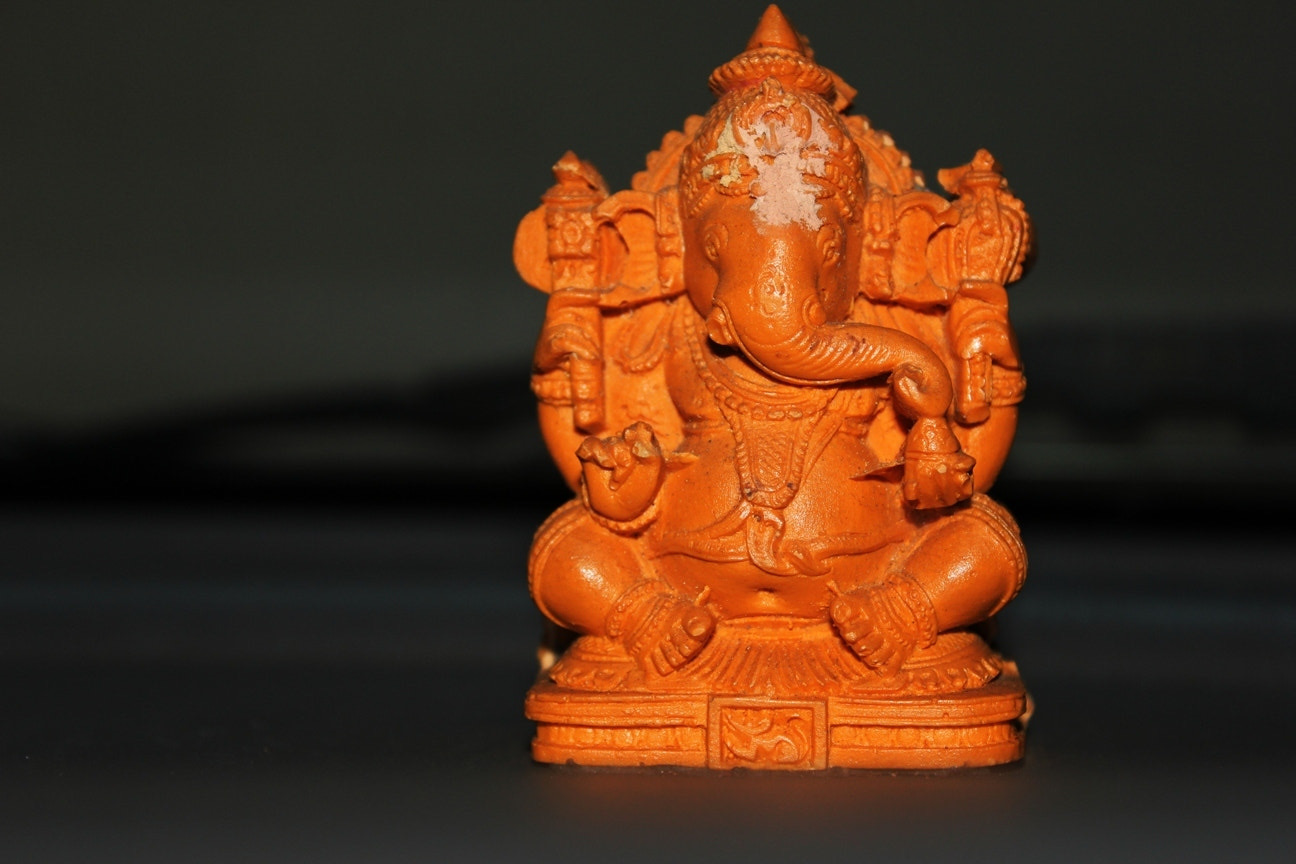
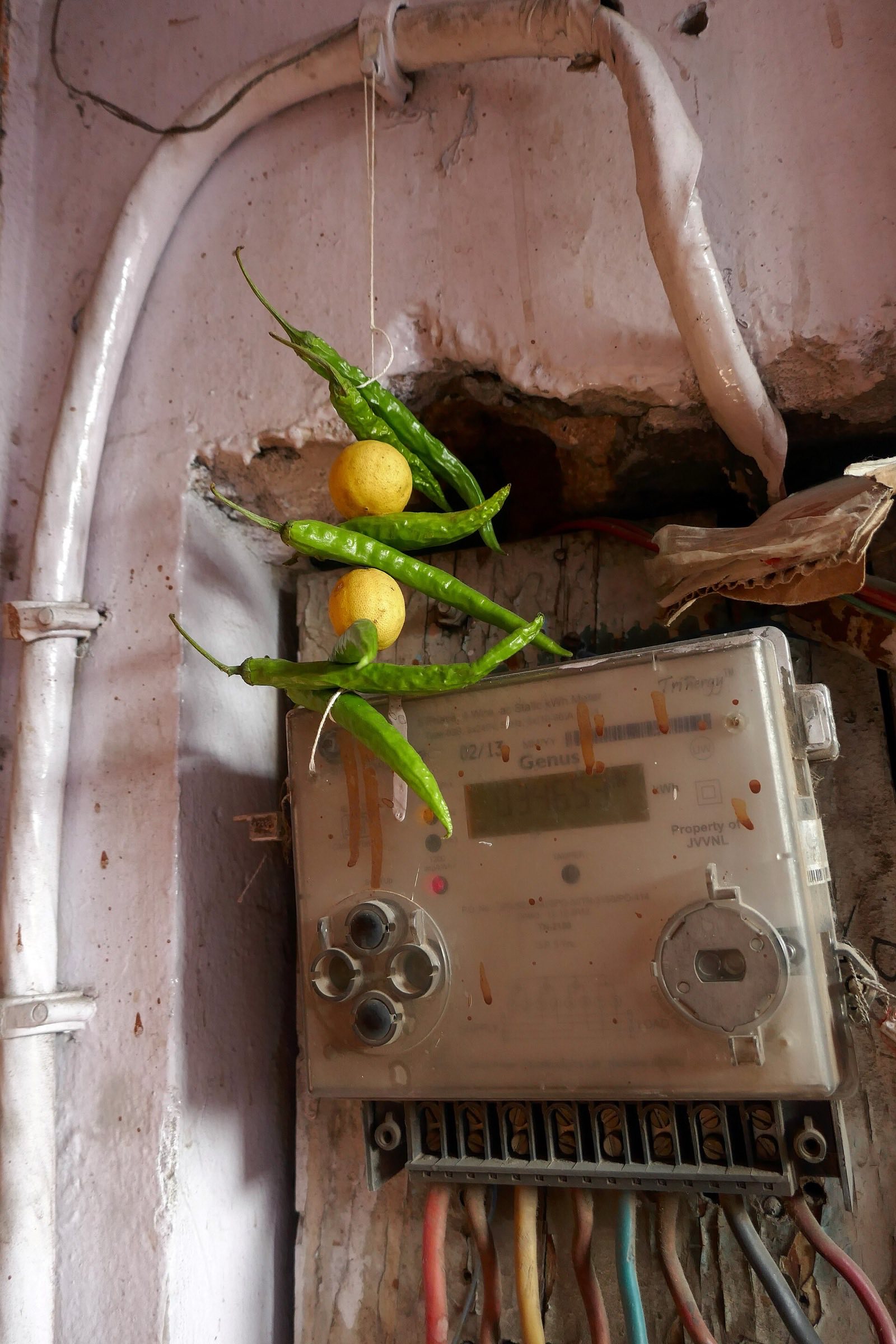
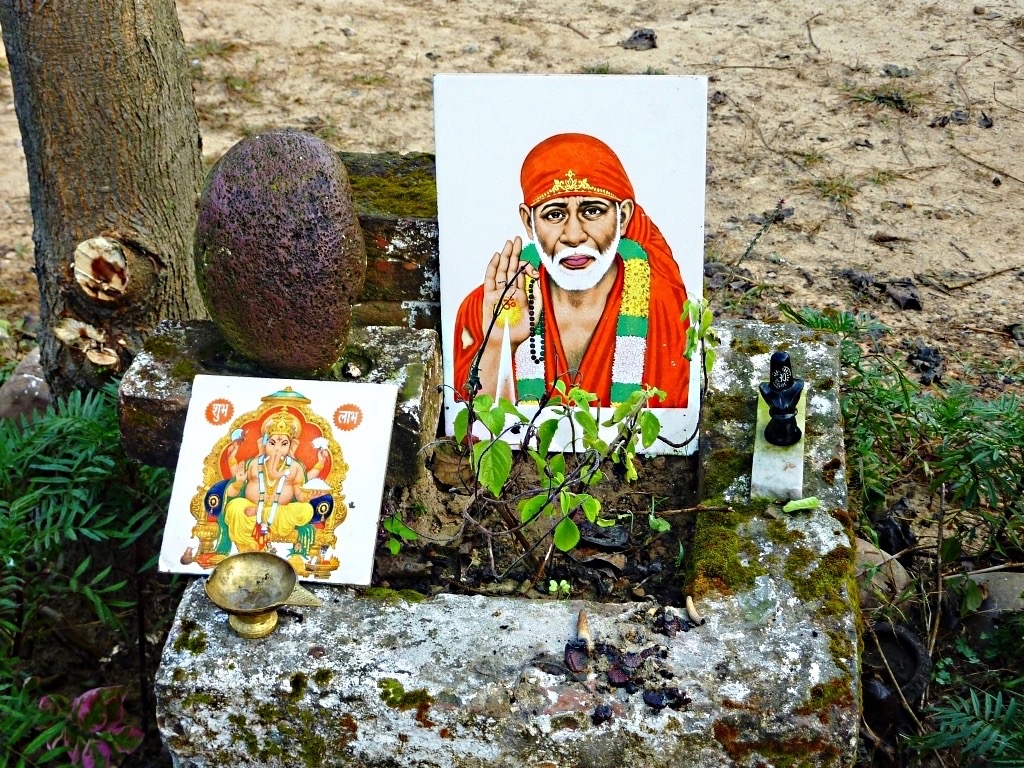
Photo credits
- Ganesha idol, festival in Maharashtra — DNW.. Photos, CC BY-SA 4.0 — source
- Hanuman statue, Jakhu Hills — 502hsuya, CC BY-SA 4.0 — source
- Shiva statue with trident — Shraddhasinghuikey, CC BY-SA 4.0 — source
- Shiva lingam, Baijnath temple — Jngupta, CC BY-SA 3.0 — source
- Vishnu carving, Rani ki Vav — Anurag choubisa, CC BY-SA 4.0 — source
- Krishna idol with flute — Chloé Desoutter, CC BY-SA 3.0 — source
- Ram Darbar idols, Ghagwal — Narsinghdhamghagwal, CC BY 4.0 — source
- Gaja-Lakshmi painting — San Diego Museum of Art, public domain — source
- Durga idol, Bhubaneswar — C Shekhar 99, CC BY-SA 4.0 — source
- Kali idol, Nimtala ghat — Subhrajyoti07, CC BY-SA 4.0 — source
- Saraswati idol, Howrah — Sumasa, CC BY-SA 4.0 — source
- Chaturmukha Brahma image, Lakkundi — Dineshkannambadi / Redtigerxyz, CC BY-SA 3.0 — source
- Tirthankara statue, Mathura — Capankajsmilyo, CC BY-SA 4.0 — source
- Back of an Indian truck — Andrea Moed, CC BY-SA 2.0 — source
- Dashboard Ganesha idol — Dhanil K, CC BY 3.0 — source
- Nimbu-mirchi totka, Jaipur — Ji-Elle, CC BY-SA 4.0 — source
- Roadside shrine at a dhaba — John Hill, CC BY-SA 4.0 — source


