The six rules
- Bottled or filtered water only. Check the seal is unbroken. Every hotel has filtered water; fill up before you get in the car.
- Ice only where the water is filtered. Hotel bars and proper restaurants use that supply. A roadside juice press does not.
- Peel it or cook it. Anything hot from a pan is fine, and fruit you peel. Leave salad, fresh chutney, cut fruit on a stall and raw coriander.
- A queue beats an empty room. Turnover is most of food safety. Sixty lunches empty the pots before anything spoils; the clean-looking room with two customers has had that curry since yesterday.
- Go easy for two days. Dal, rice, bread, cooked vegetables. Save the fried breakfast for day three.
- Sanitiser before you eat. You will use your hands more than you expect, and the hand does more harm than the food.
If it happens anyway
A quarter to a third of travellers to South Asia get a bout of diarrhoea in the first fortnight. It is rarely serious and passes in one to three days. Drink more than you want to: rehydration salts from any pharmacy, in bottled water, replace what you lose far better than water alone. Then eat plainly and rest.
Loperamide holds the symptoms off for a few hours, useful before a long drive, but it treats the traffic, not the cause. See a doctor for fever or blood, if it runs past three days, or if you cannot keep fluids down; any hotel will call one to the room.
Rajasthan: cooking without water
Little rain and long distances to market shaped this food: fresh vegetables were a luxury, so the desert kitchen leans on lentils, gram flour, milk solids, ghee and things that dry well.
| Dish | What it is | Where |
|---|---|---|
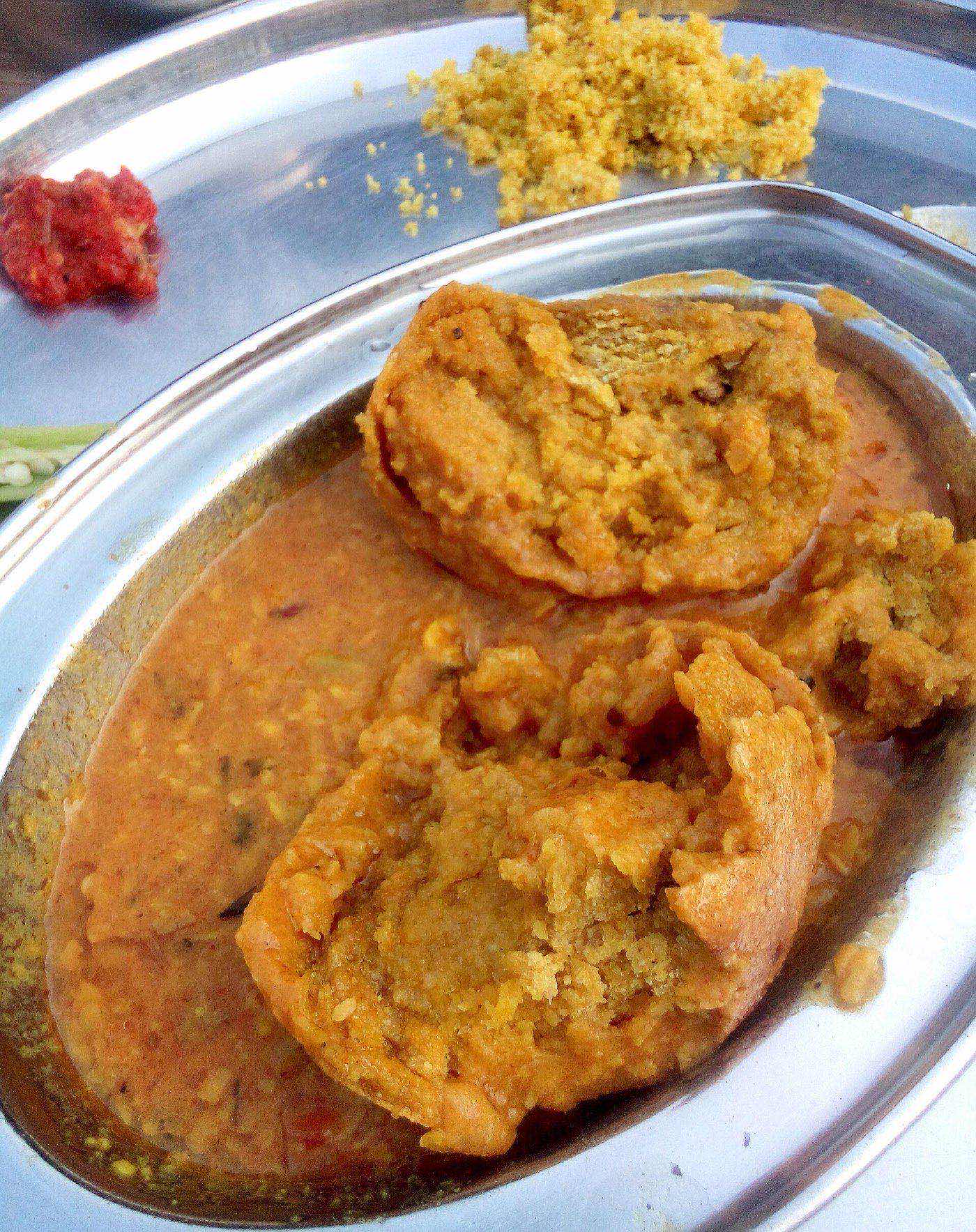 Dal baati churma photos | Hard baked wheat balls cracked open and drowned in ghee, with lentils and a sweet crumble of the same dough. Heavy. | Everywhere. Best at Narlai. |
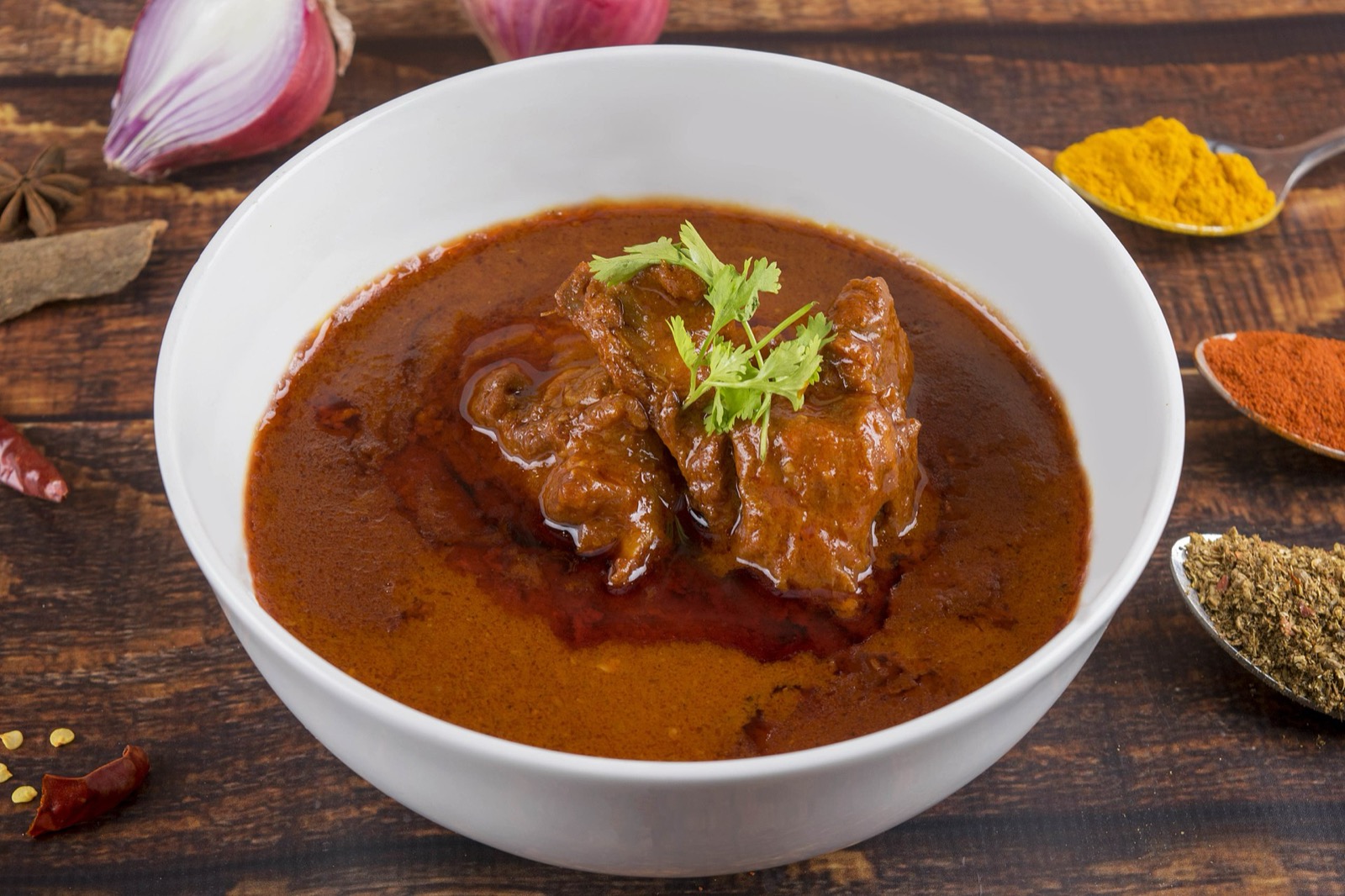 Laal maas photos | Goat in a gravy of Mathania chillies and yoghurt. A Rajput hunting dish, and the one genuinely hot thing on the menu. | Jodhpur, Narlai, Jaipur. Not Pushkar. |
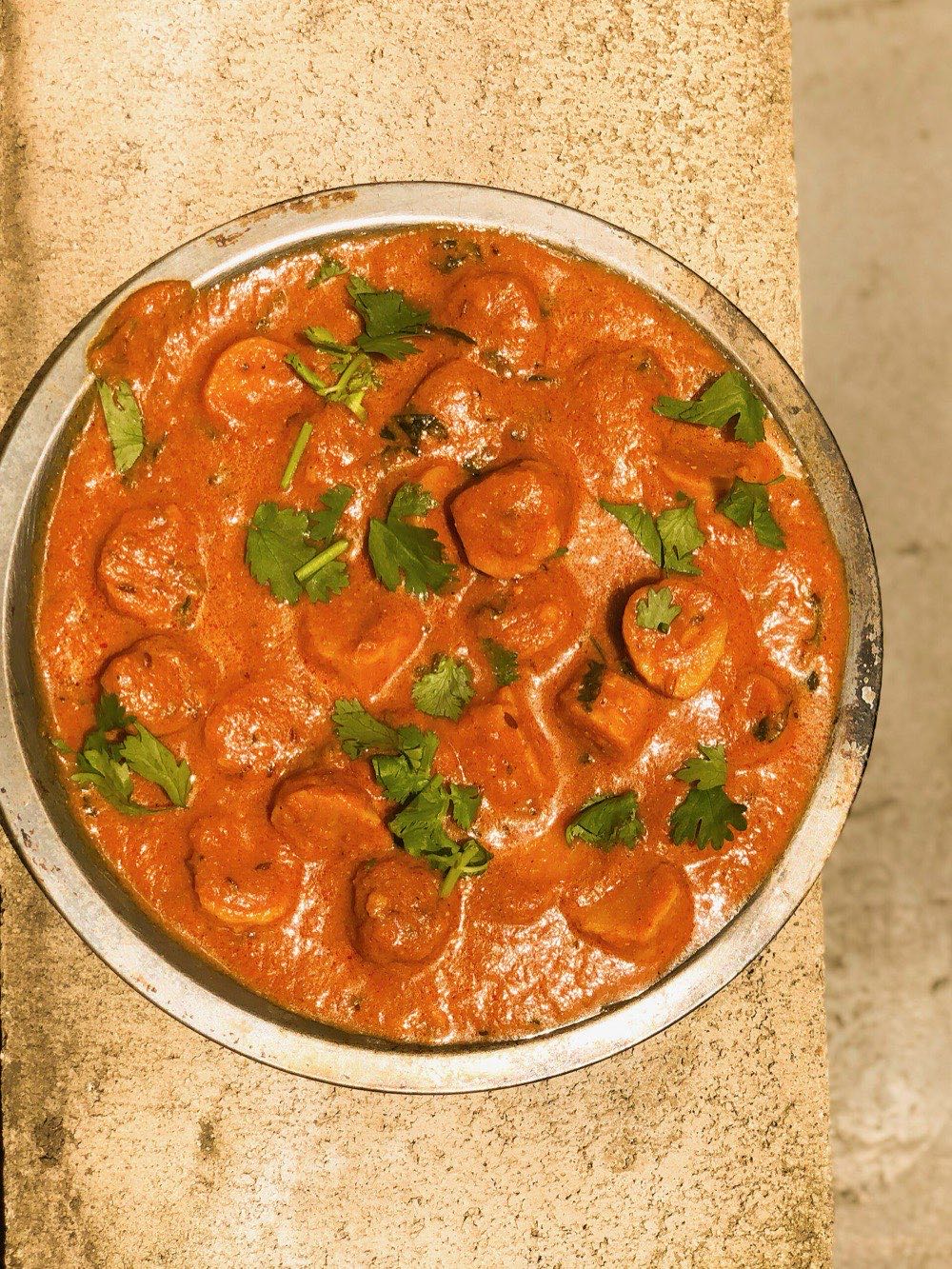 Gatte ki sabzi photos | Gram-flour dumplings in yoghurt gravy — invented for a place with no fresh vegetables. | Any thali. |
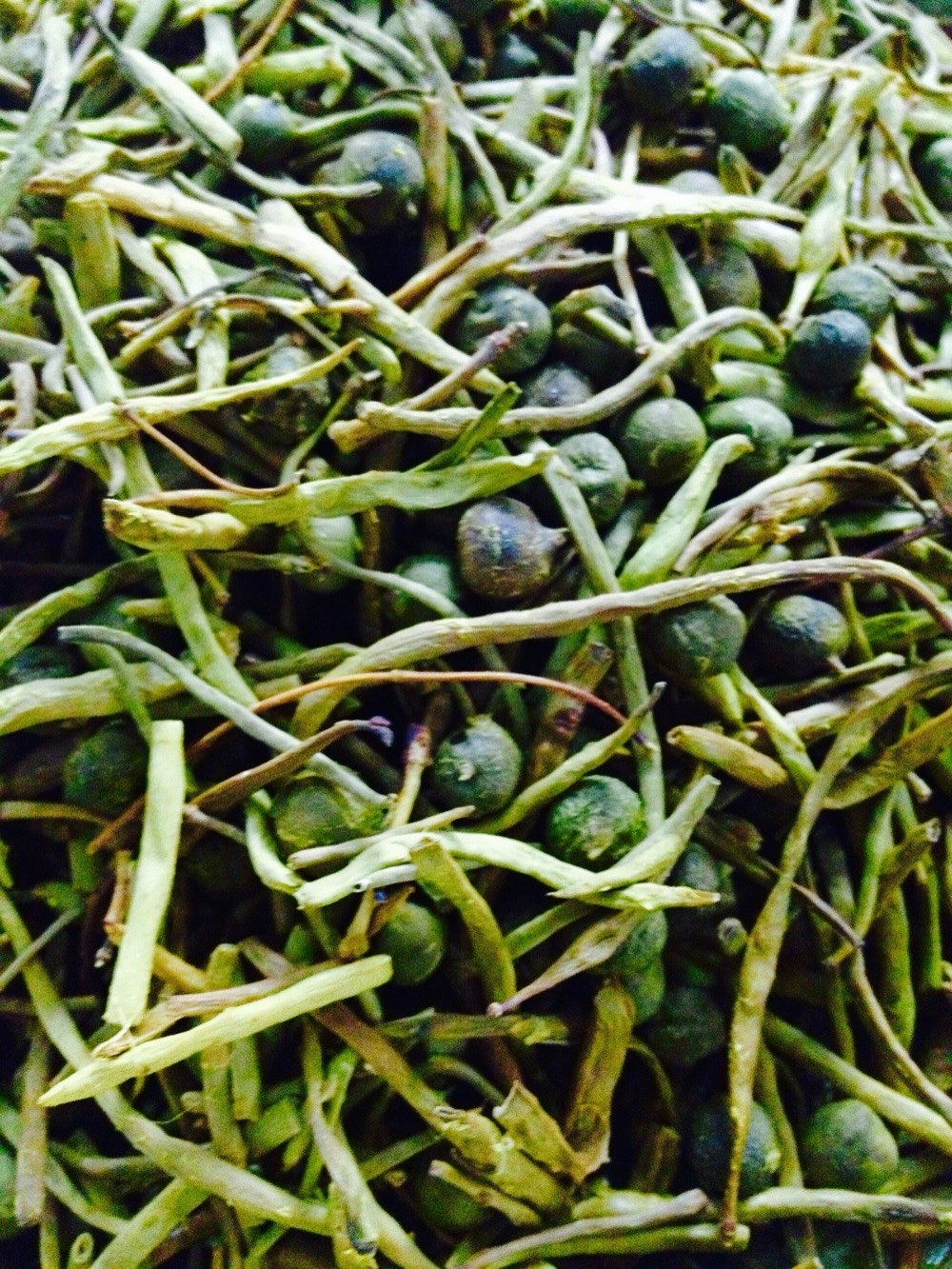 Ker sangri photos | Dried desert berries and khejri-tree beans, soaked and fried. Both grow where nothing else will — famine food, now the dearest line on the menu. | Jodhpur and west. |
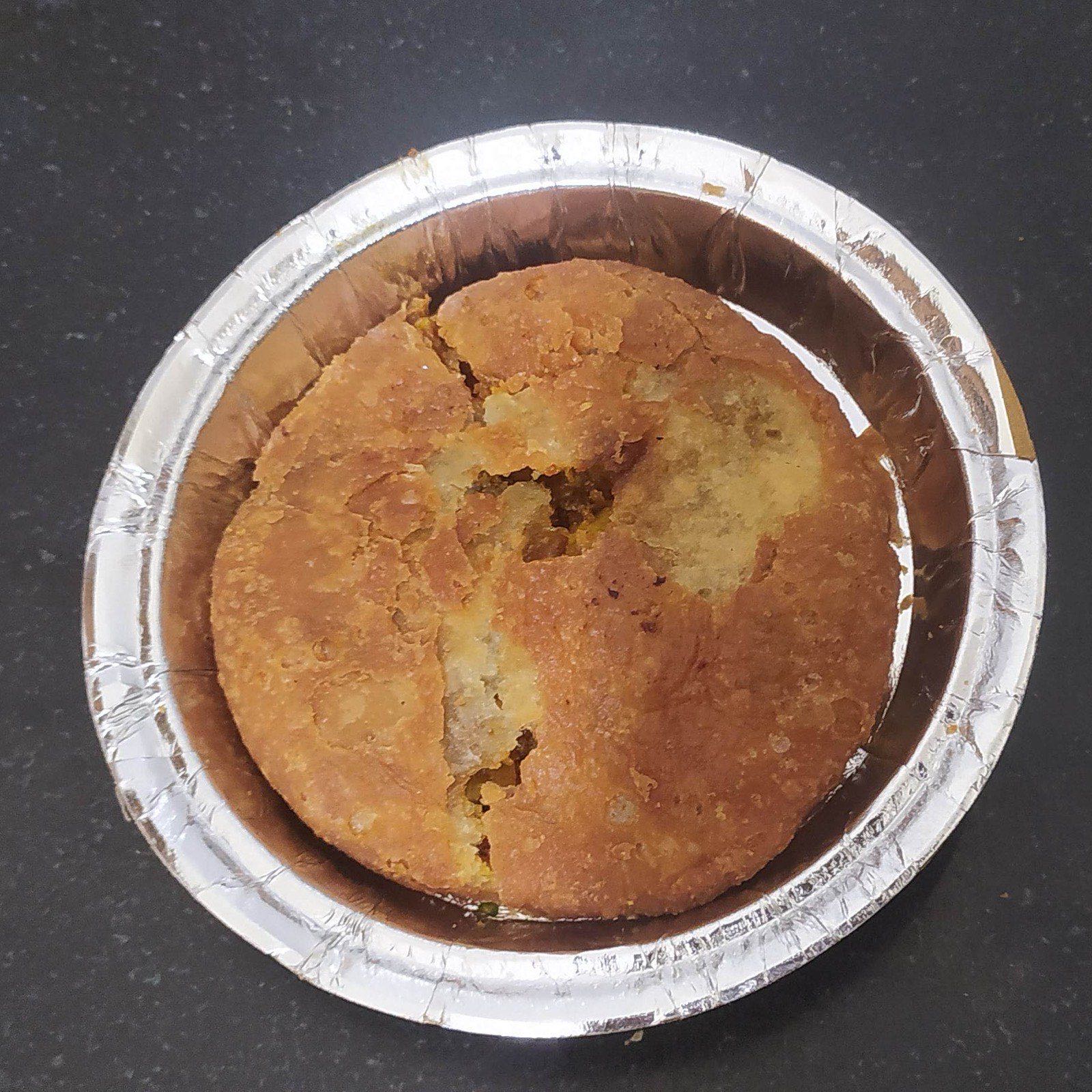 Pyaaz kachori photos | Fried pastry ball stuffed with spiced onion. | Jodhpur, at breakfast. |
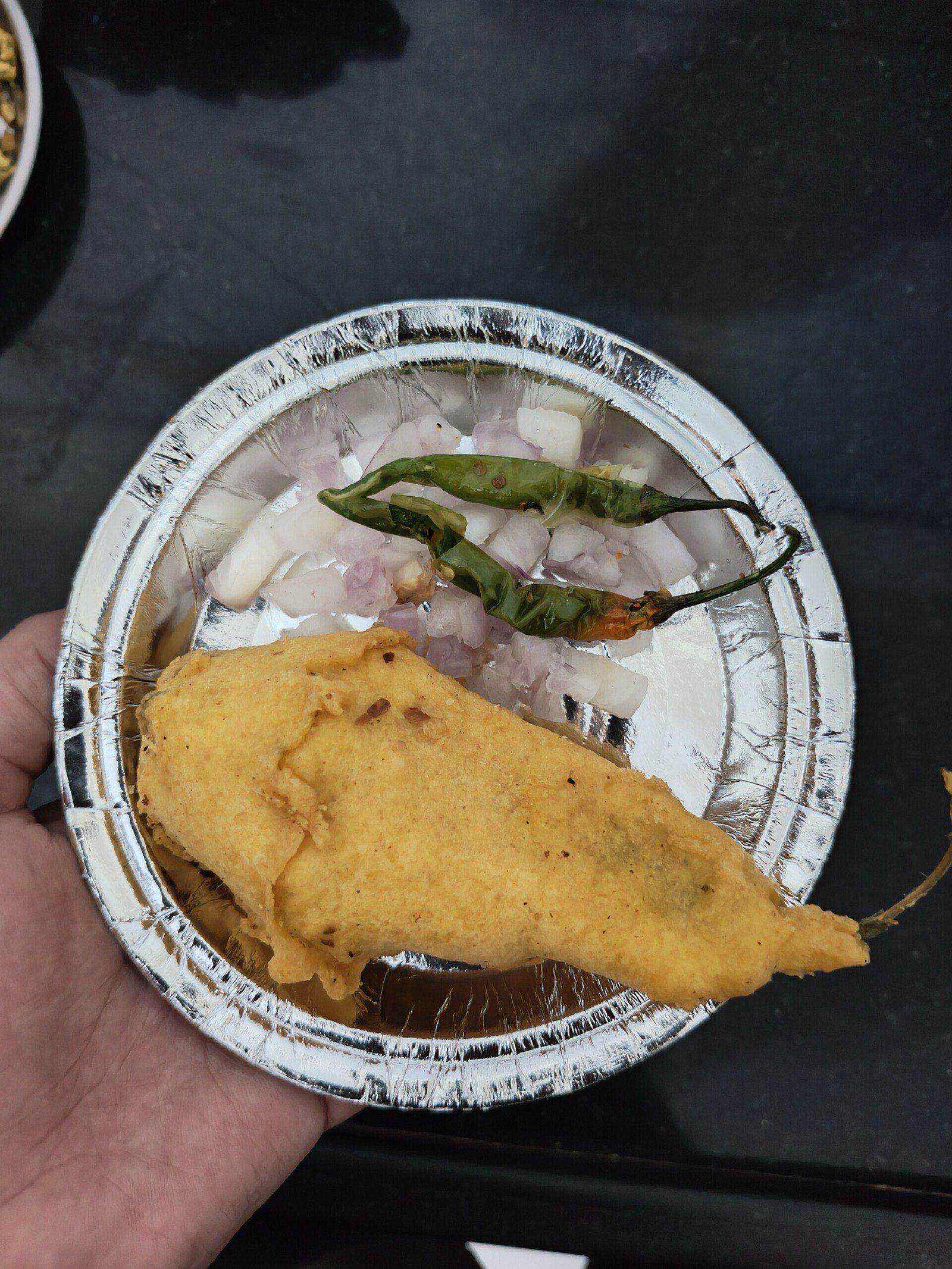 Mirchi vada photos | A whole green chilli stuffed with potato and fried in batter. Milder than it looks. | Jodhpur, clock tower market. |
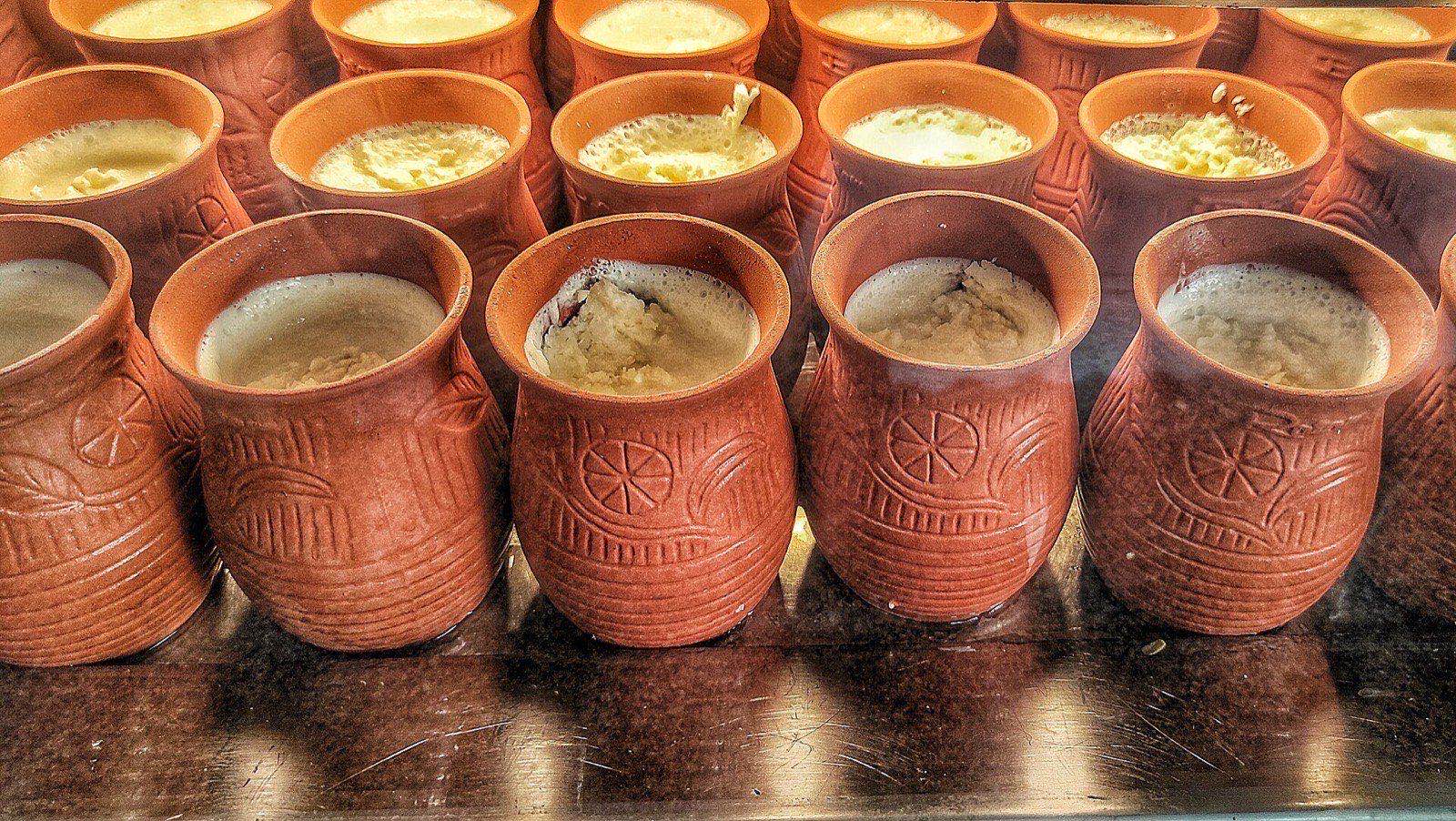 Makhaniya lassi photos | Saffron and cardamom curd, thick enough to stand a spoon in. A meal, not a drink. | Mishrilal, Sardar Market gate. |
Delhi and Agra
| Dish | What it is | Where |
|---|---|---|
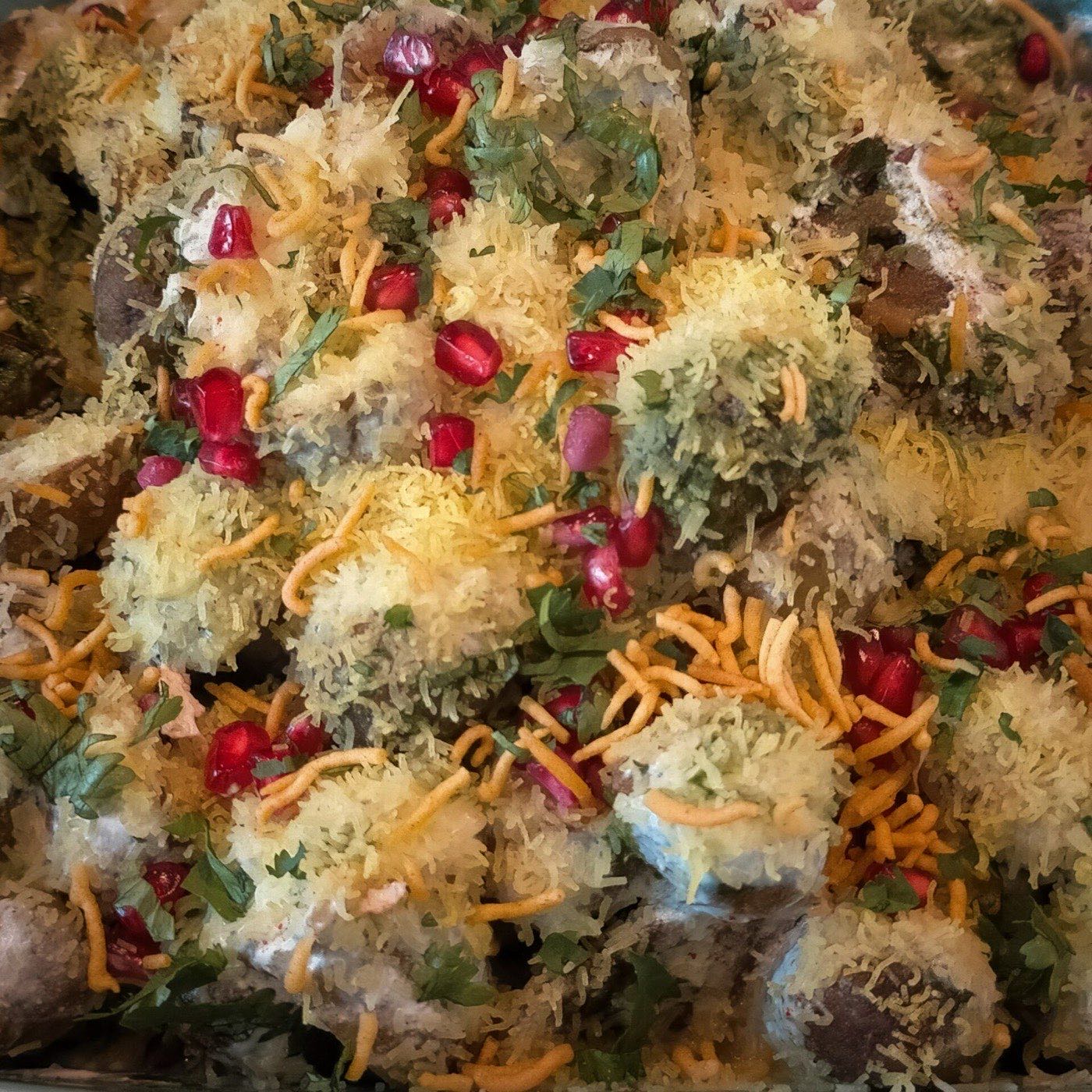 Chaat photos | Fried potato patties; crisp shells filled with spiced water, yoghurt, tamarind. Cold, wet, hand-assembled — buy it in a sweet shop, not off a cart. | Old Delhi. |
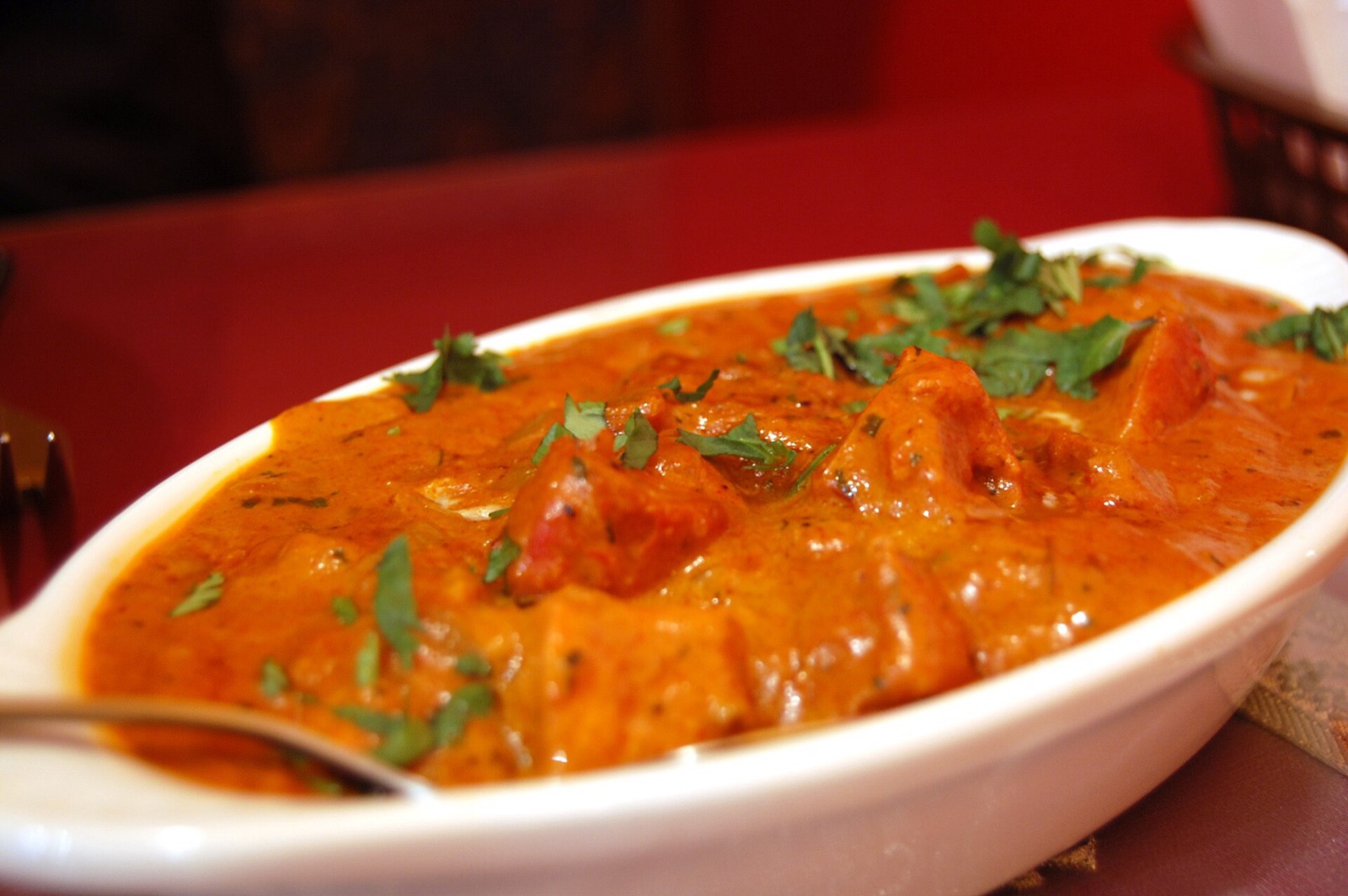 Butter chicken photos | A Delhi dish, not a British one: refugees from Peshawar opened Moti Mahal in Daryaganj in 1947 and put leftover tandoori chicken into tomato, butter and cream. Two families are still in court over who did it. | Delhi. |
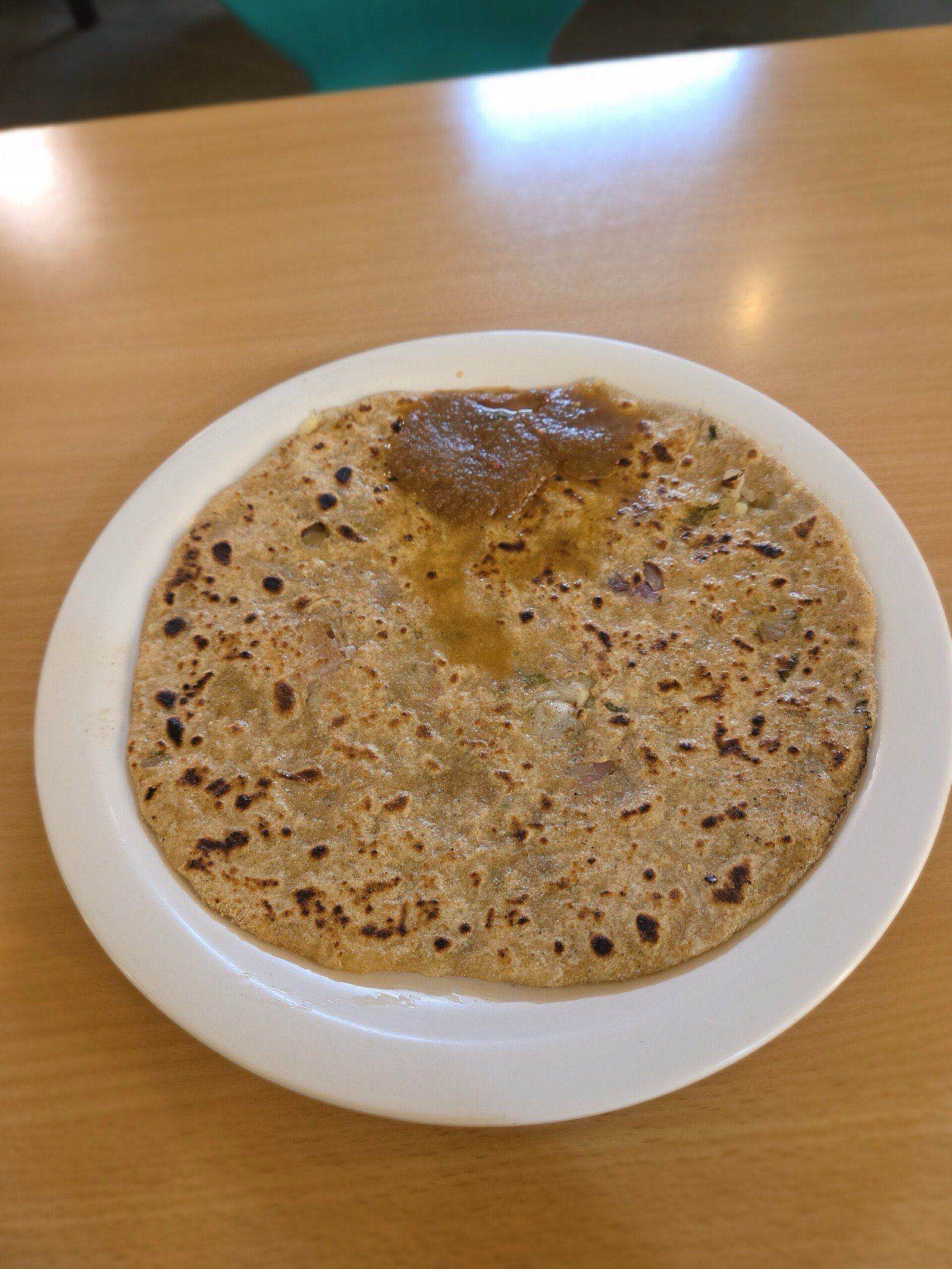 Paratha photos | Flatbread stuffed with potato, cauliflower or paneer, fried. | Paranthe Wali Gali, Chandni Chowk. |
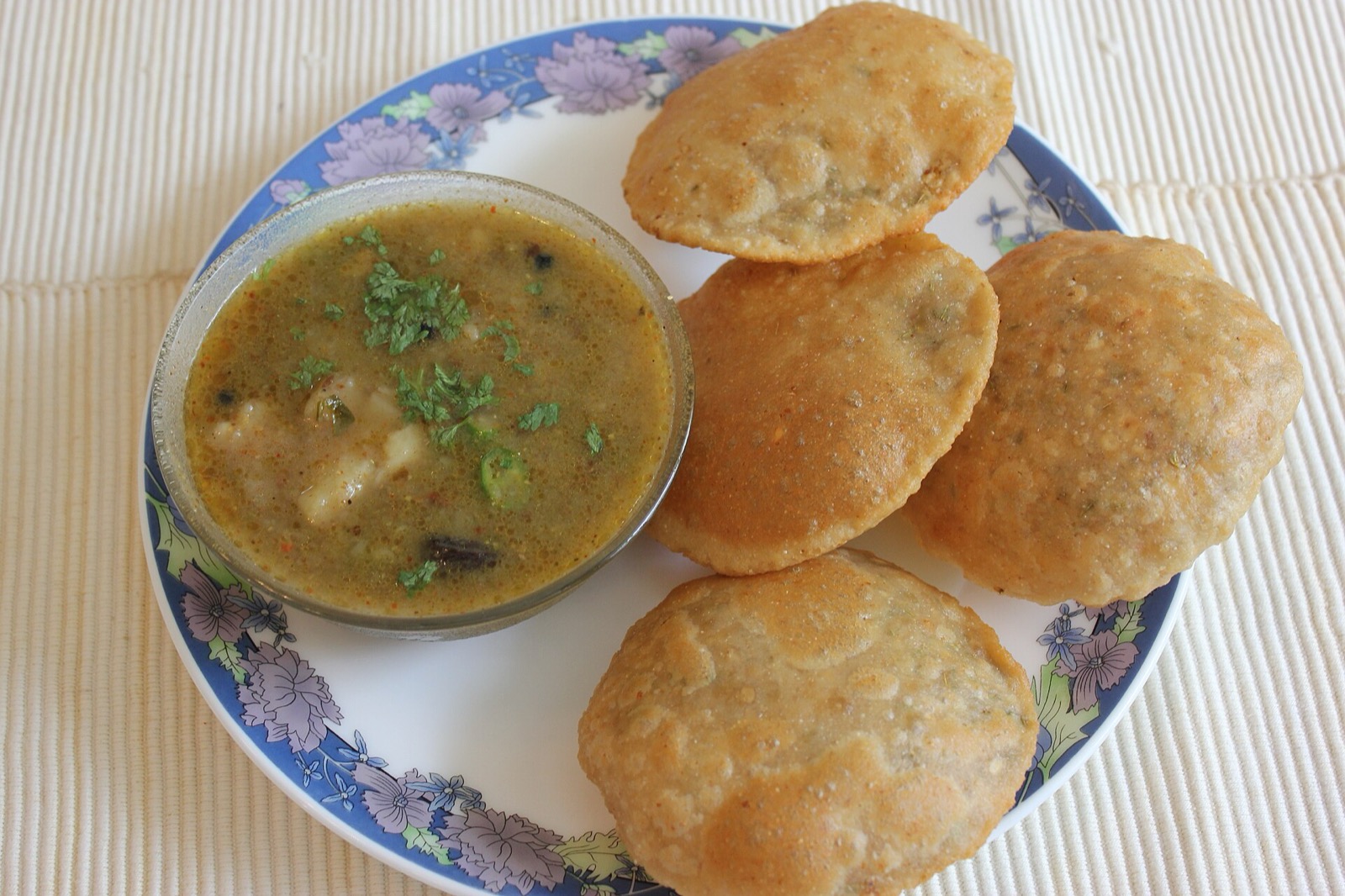 Bedai and jalebi photos | Fried lentil-stuffed bread with spiced potato gravy, and a hot syrup coil to cut it. | Agra breakfast; the pairing barely exists elsewhere. |
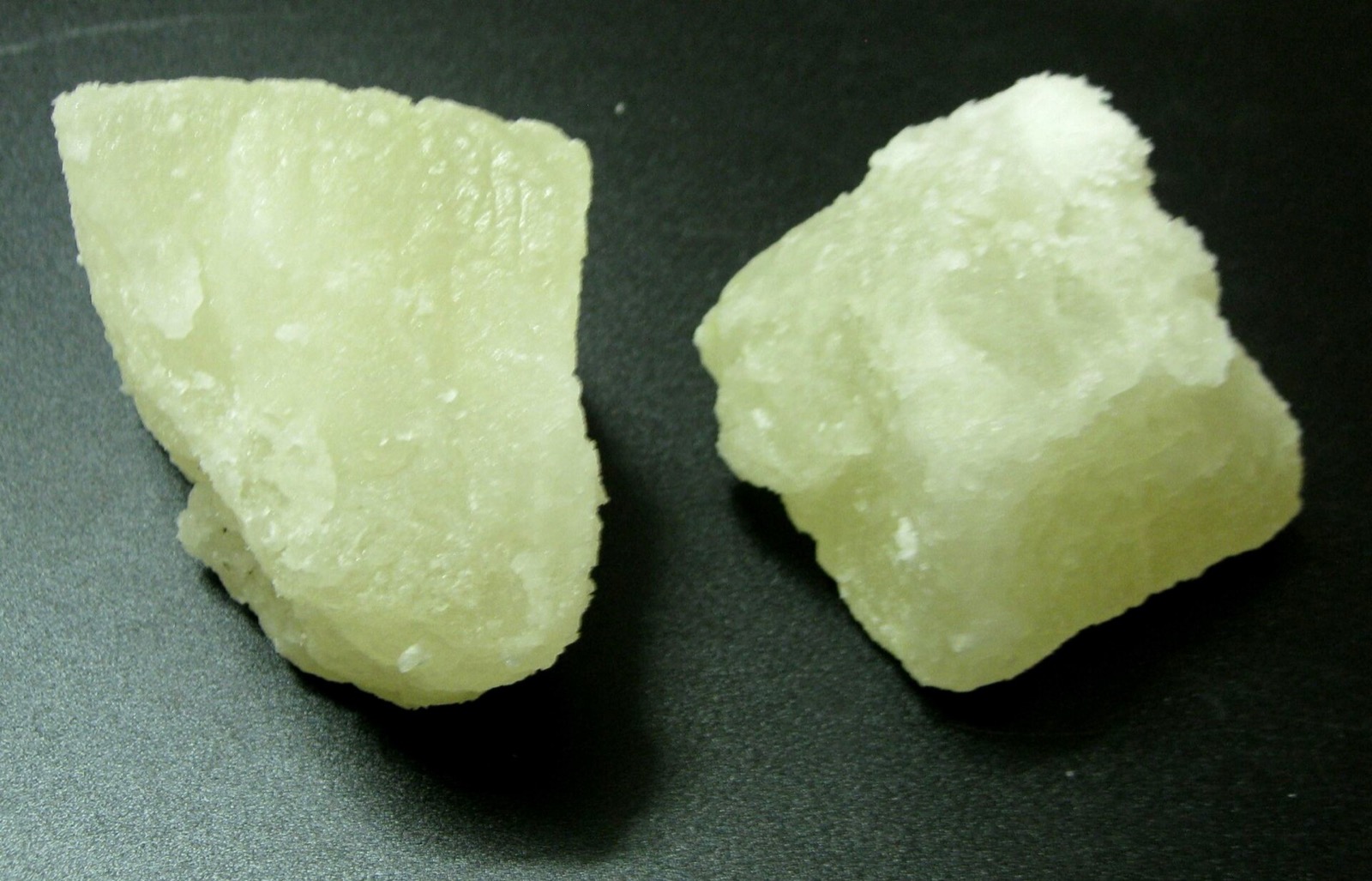 Petha photos | Translucent candied ash gourd, by tradition from Shah Jahan's kitchens. Buy plain or saffron; the flavoured ones are for tourists. | Agra, by the kilo. |
What you meet every day
| Dish | What it is |
|---|---|
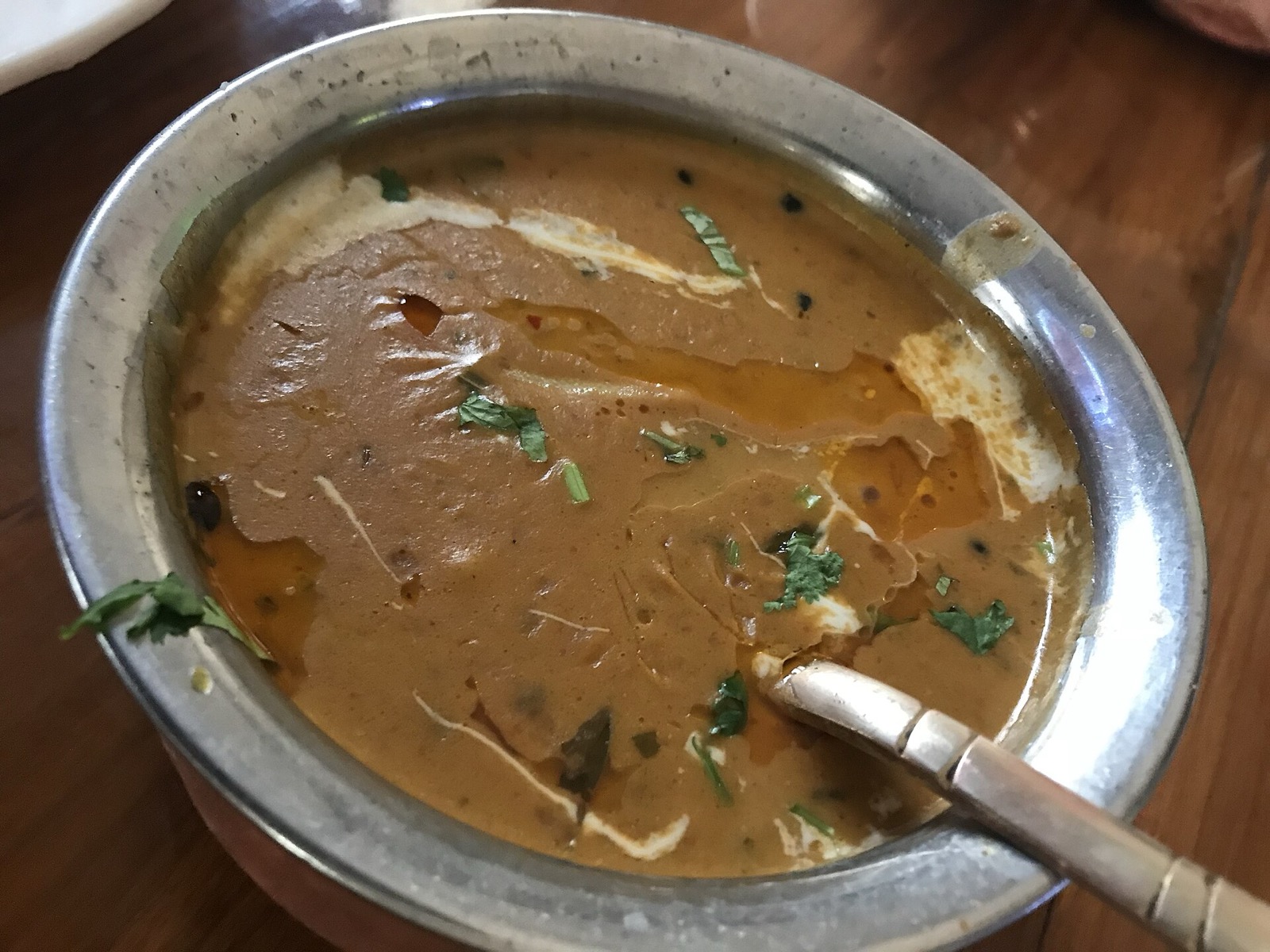 Dal photos | Lentils. Tadka is the everyday yellow one, makhani the black lentils cooked overnight with butter. The safest thing on any menu, often the best. |
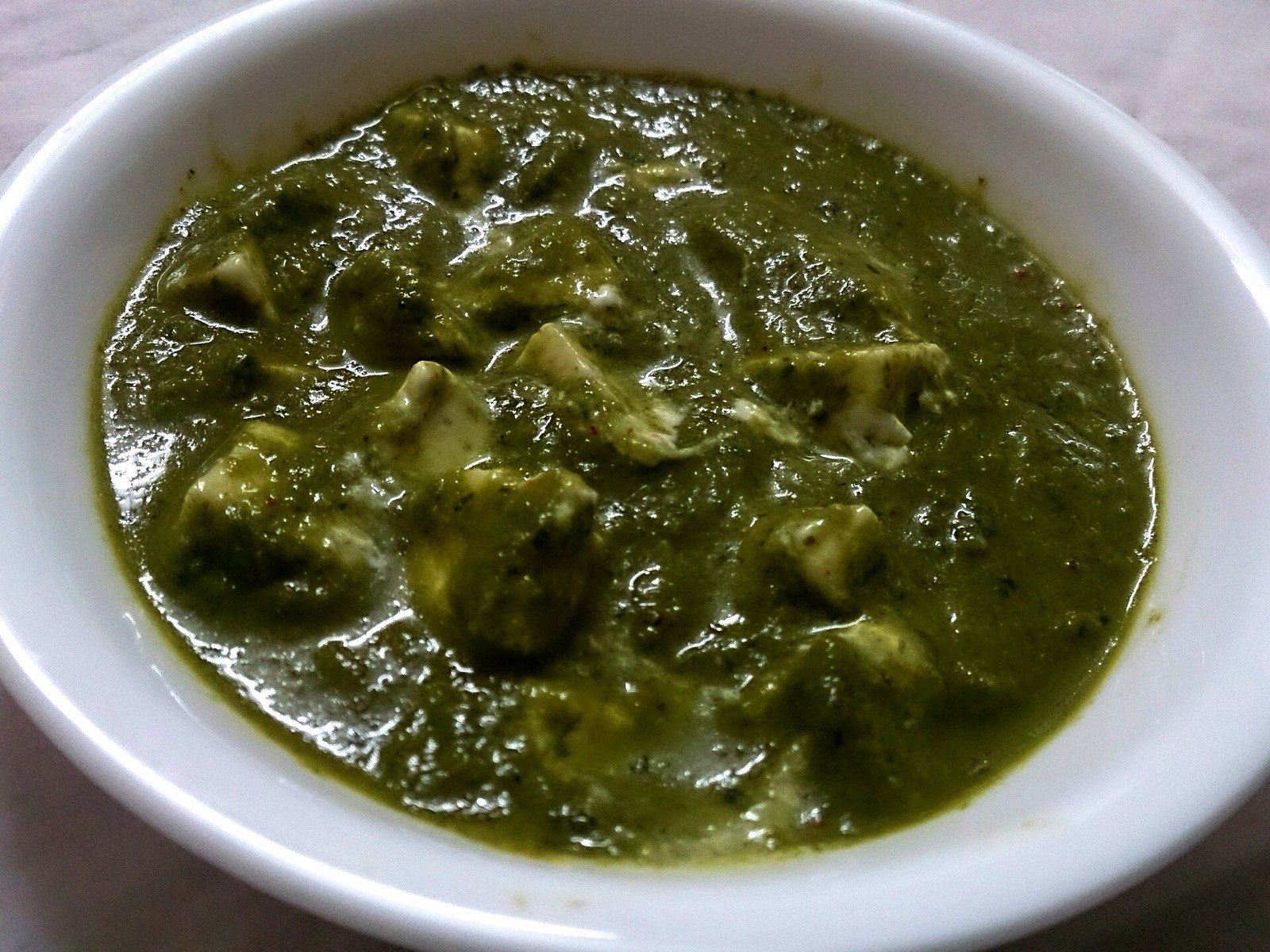 Paneer photos | Fresh cheese that does not melt: in spinach, in tomato and cream, or grilled as tikka. The protein of half the country. |
| Roti and naan photos | Roti is unleavened wholewheat slapped on the tandoor wall; naan is leavened white flour, softer and richer. Roti is daily bread, naan restaurant food, and either keeps coming until you stop it. |
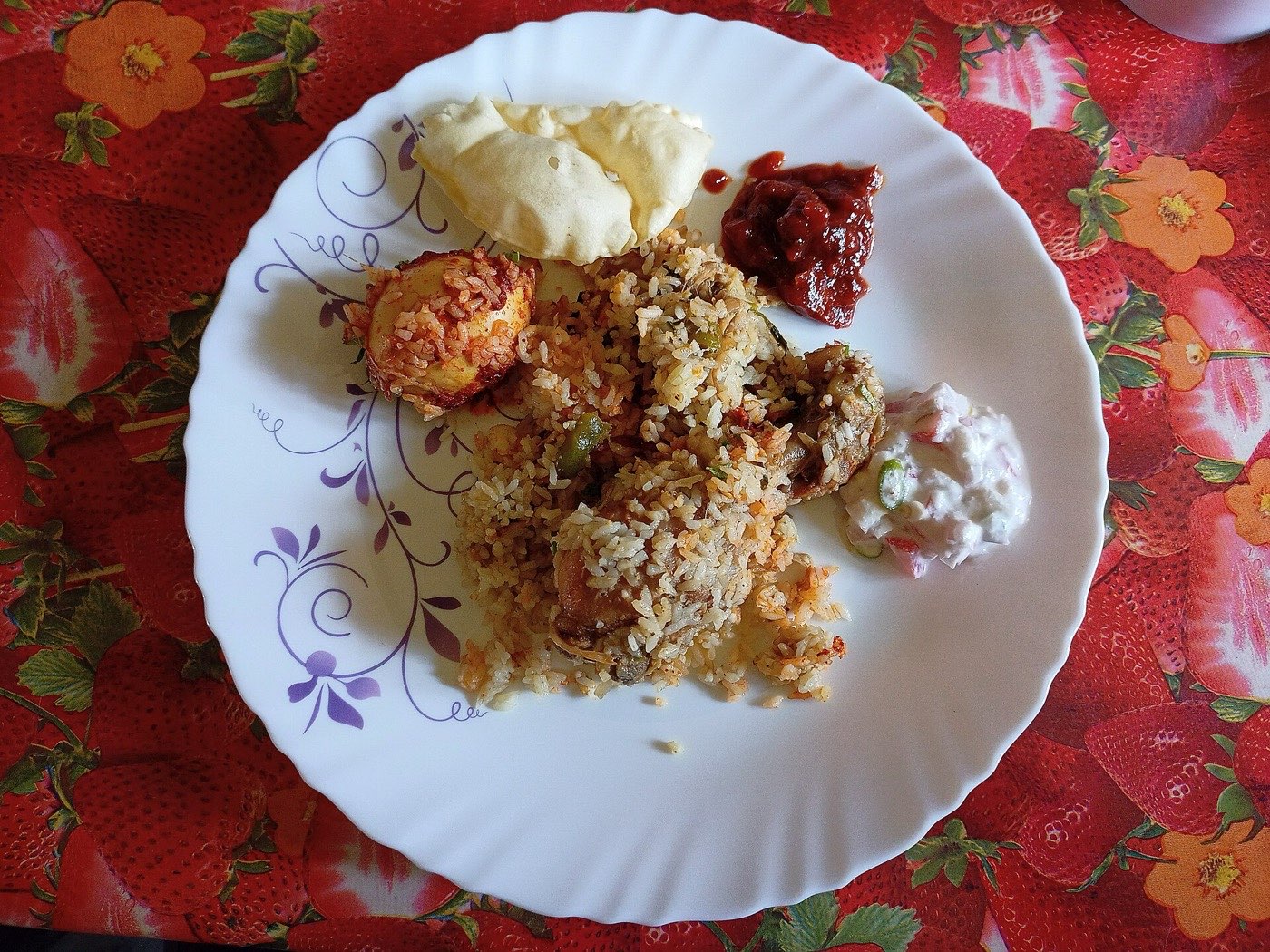 Biryani photos | Rice layered and steamed with meat or vegetables. A Hyderabadi dish; in Rajasthan a menu filler, so order local. |
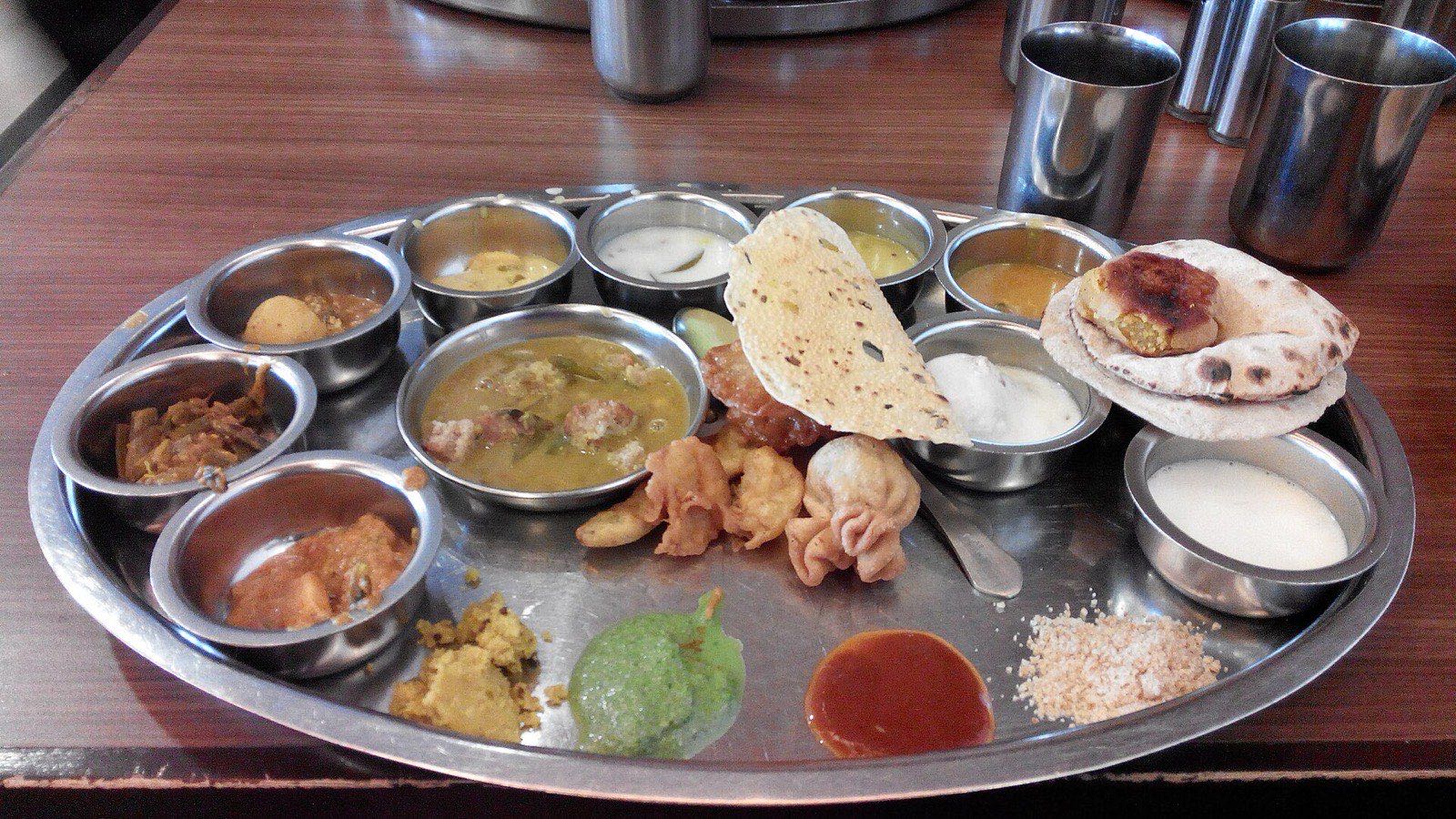 Thali photos | A steel tray of small bowls: vegetables, dal, curd, pickle, bread, rice, a sweet. One price, refilled until you refuse, and the best value in India. |
Vegetarian is the default, not the compromise
Rajasthan is among the most vegetarian states in India, and the meat-free menu here is the long, well-practised one. Pushkar goes furthest: the town around the Brahma temple allows no meat, no eggs and no alcohol, and the rule is enforced rather than suggested. The food there is still among the best of the trip.
 A board reading Pure Veg means what it says: no meat has ever been in that kitchen, and for many diners that is religion, not preference. On packaged food check the corner mark — a green dot in a green square is vegetarian, a brown triangle in a brown square is not. Eggs count as non-vegetarian, which catches Europeans out. photos
Sweets, and it is Diwali week
You reach Jaipur as the festival opens, and sweets are how Diwali is transacted. Boxes will be offered — by the hotel, a shopkeeper, your driver — and taking one and eating a piece is the right answer. Mithai is sold by weight and costs little.
| Sweet | What it is | Note |
|---|---|---|
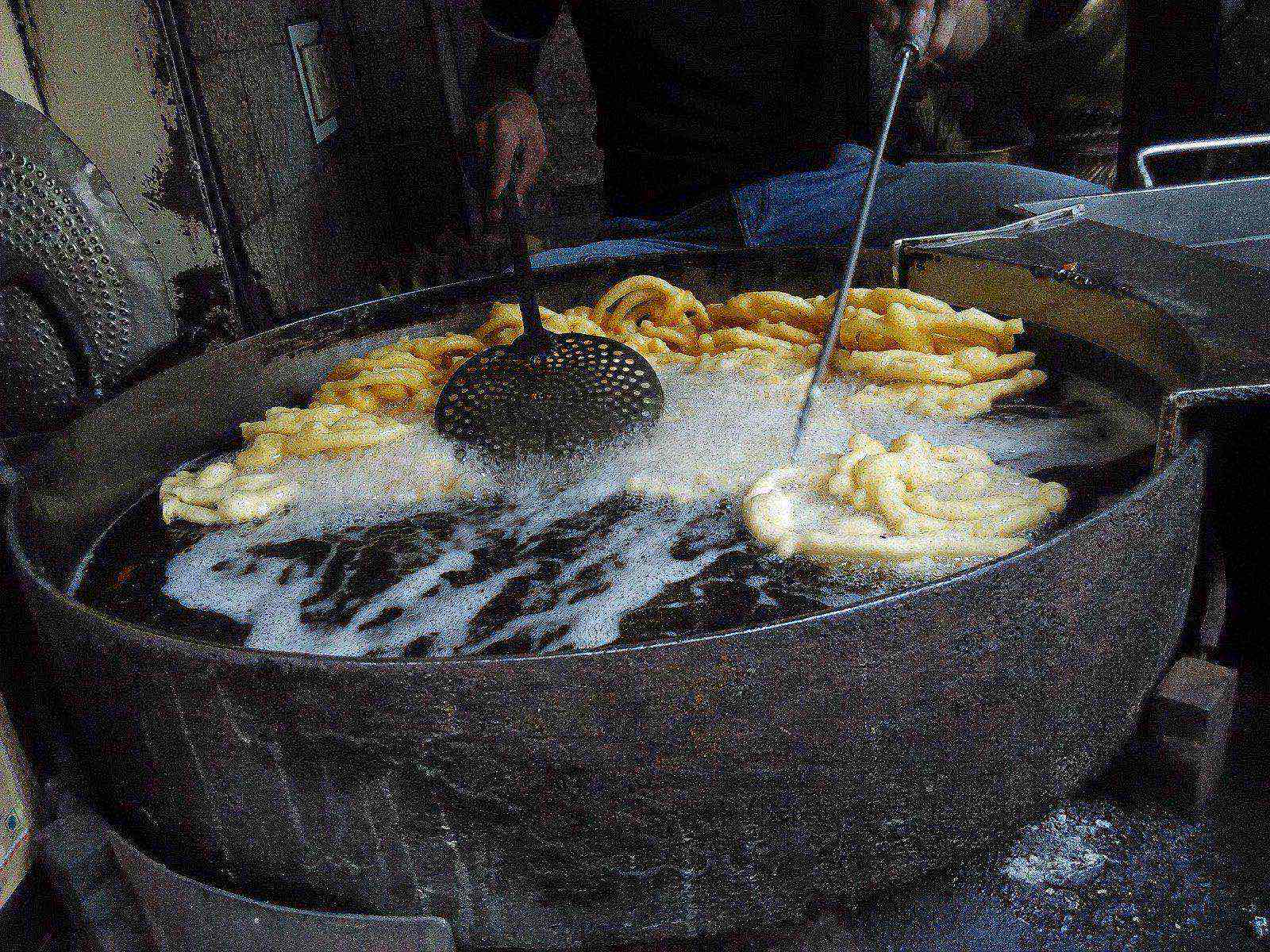 Jalebi photos | Batter piped in coils into hot oil, then soaked in syrup. | Only worth eating minutes from the pan. Buy where someone is frying. |
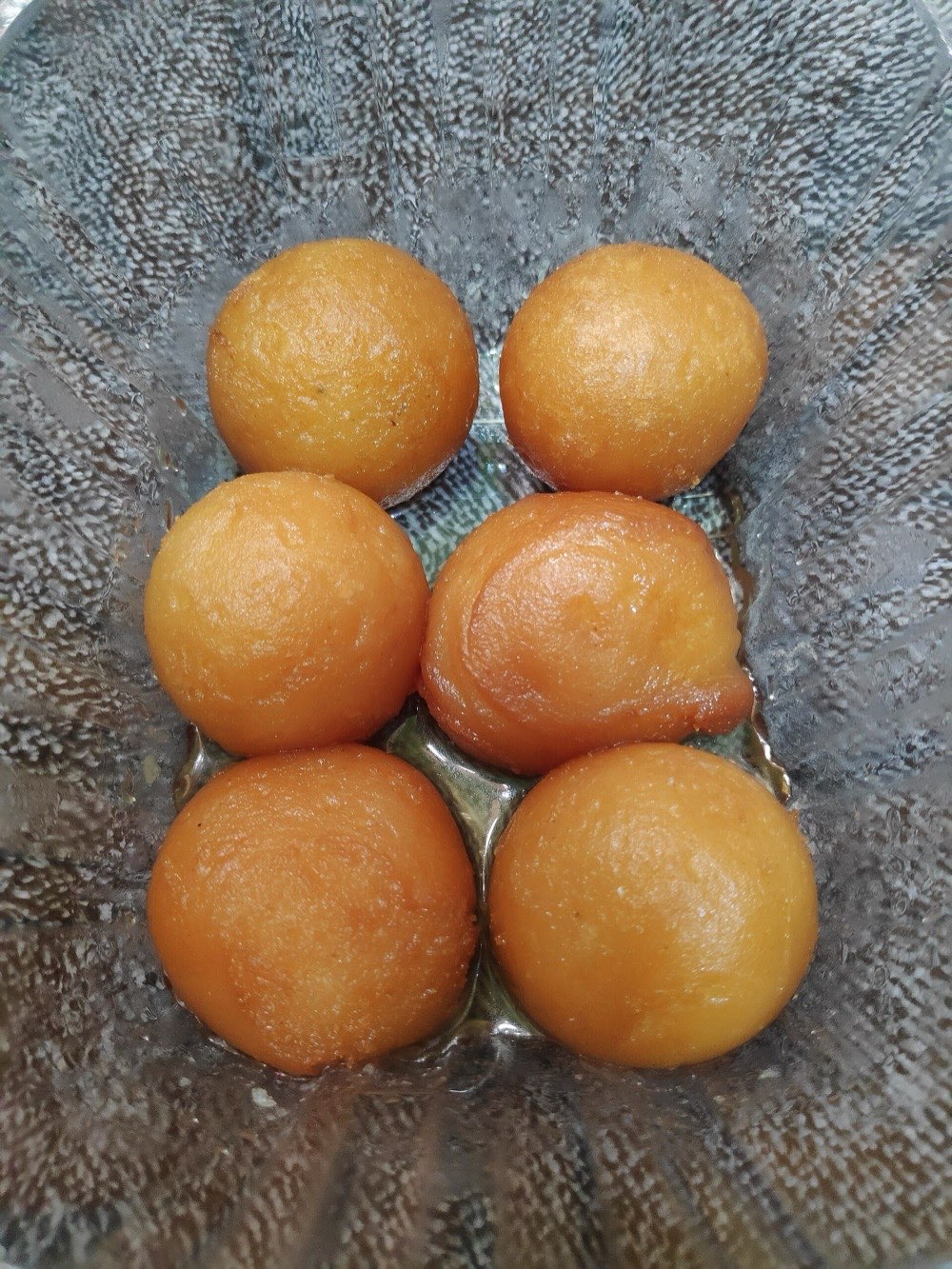 Gulab jamun photos | Dried milk solids, fried and steeped in rose syrup. | Warm. The one everybody knows. |
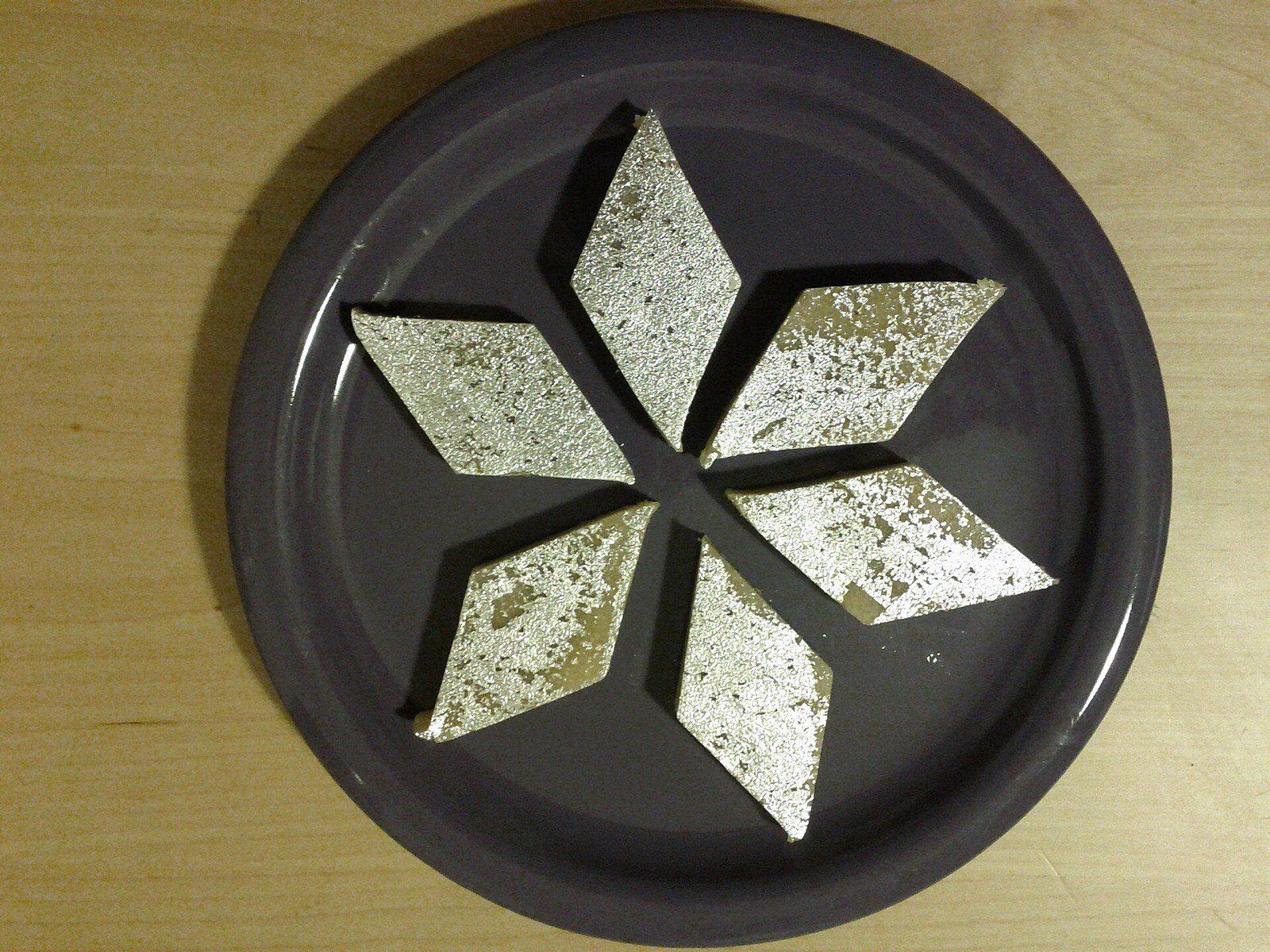 Barfi photos | Set milk fudge cut into diamonds. The silver leaf is edible. | What is in the gift box. |
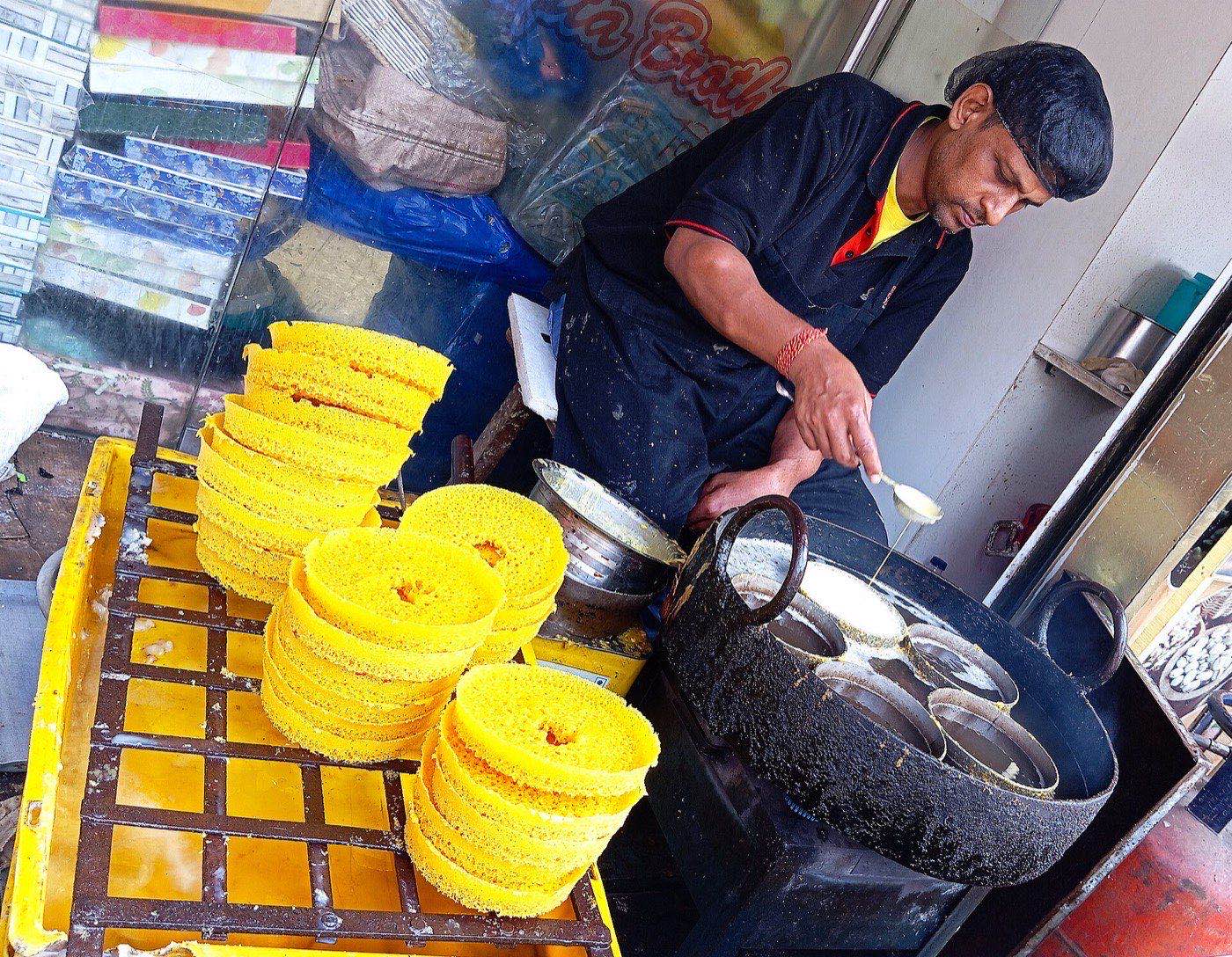 Ghewar photos | A honeycomb disc of fried batter soaked in syrup, often under thickened milk. The Rajasthani speciality. | A monsoon-festival sweet. Jaipur's big shops carry it later; in November, ask rather than expect. |
Drinking
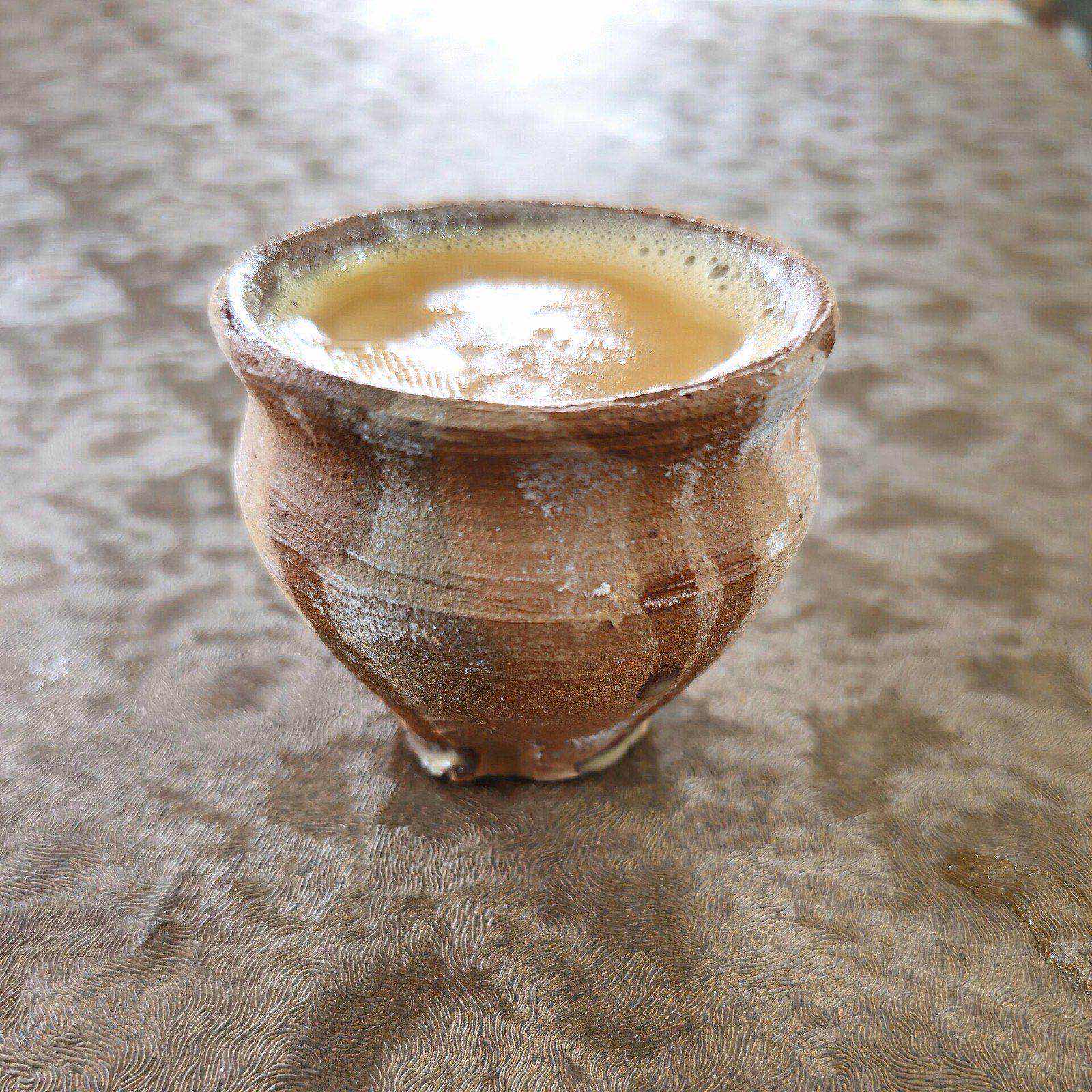 Chai is the default and it is safe: milk, water, leaves and sugar boiled hard together, strained into a small glass. Take it whenever it is offered. photos Coffee in the north means instant or chain espresso; the good coffee is a thousand kilometres south.
Lassi is only as good as the curd, so drink it where they sell nothing else. Fresh juice needs care: the fruit is fine, the water it was thinned with and the glass may not be. Same for a sugarcane press. A green coconut opened in front of you has no such problem. photos
Alcohol is available but never casual. Rajasthan taxes it hard, the hotel bar is usually the only source, and Pushkar has none. Kingfisher is the beer everyone drinks. photos Dry days are the catch: each state fixes its own list, and licensed bars, hotels included, sell nothing on them. Diwali falls in our week and is a dry day in some states but not others; the 2026 lists disagree. Ask at check-in, not at dinner.
At the table
Eat with the right hand; the left is for other work, and the rule holds even where nobody would say anything. Bread is the cutlery: tear a piece and pick the food up with it.
Dishes are shared. Order three or four between the four of you with rice and bread rather than a main each — cheaper, and how the food is meant to be eaten. Thali refills are free and keep coming until you say stop.
Indian mild is not European mild. Say kam mirchi — less chilli — and anywhere used to foreigners it is respected without comment. Curd, rice or bread put out a burning mouth; water spreads it. Hotel breakfast runs both ways, omelettes and toast beside paratha and curry.
Photo credits
- Dal baati churma — Harshmander Rastogi, CC BY-SA 4.0 — Commons
- Laal maas (shown as lal mans) — AugustineKajur, CC BY-SA 4.0 — Commons
- Gatte ki sabzi — EAT&ART TARO, CC BY-SA 4.0 — Commons
- Ker sangri — AKSHRAJJODHA, CC BY-SA 4.0 — Commons
- Pyaaz kachori — PabIoChocobar, CC0 — Commons
- Mirchi vada — "Pyaaz Kachori" (Commons username), CC0 — Commons
- Makhaniya lassi (shown as thick lassi in a kulhad) — Jashjashjash, CC BY-SA 4.0 — Commons
- Chaat — Aliva Sahoo, CC BY-SA 4.0 — Commons
- Butter chicken (shown as chicken makhani) — stu_spivack, CC BY-SA 2.0 — Commons
- Paratha — Gannu03, CC BY-SA 4.0 — Commons
- Bedai and sabzi — Ravi Talwar, CC BY-SA 4.0 — Commons
- Petha — Rsrikanth05, CC BY-SA 4.0 — Commons
- Dal makhani — Marajozkee, CC BY-SA 4.0 — Commons
- Paneer (shown as palak paneer) — DreamyFlutura11, CC BY-SA 4.0 — Commons
- Biryani — Chinchu.c, CC BY-SA 4.0 — Commons
- Thali — Dharmadhyaksha, CC BY-SA 4.0 — Commons
- Jalebi frying — Sumita Roy Dutta, CC BY-SA 4.0 — Commons
- Gulab jamun — Gaurav Dhwaj Khadka, CC BY-SA 4.0 — Commons
- Barfi (shown as kaju katli) — Unknomics, CC BY-SA 3.0 — Commons
- Ghewar — Salil Kumar Mukherjee, CC BY-SA 4.0 — Commons
- Masala chai (shown in a kulhad) — Gannu03, CC BY-SA 4.0 — Commons
- Green dot / brown triangle vegetarian mark — Food Safety and Standards Authority of India, public domain — Commons


